








Let me be honest about where I started. I thought a calm nursery was a Pinterest fantasy – the sort of room that looks serene for exactly eleven minutes before a toddler relocates every cushion to the floor. Could matching wood tones and a tidy shelf really make a room feel restful, or was I just being sold a mood board? The answer surprised me, and most of it comes down to choices you make before the furniture even arrives.
Because the calm you feel walking in is not an accident. It is the sum of repeated finishes, breathing room between objects, and storage that hides the chaos rather than displaying it. Get those three right and the room does the heavy lifting. I tested this against a range that takes coordination seriously, and that is where Boori’s solid wood nursery collection kept pulling me back.
Start with the finish, not the furniture
Most people pick a cot first. Big mistake – or at least it was mine. Choose your finish first, then let every piece follow it. Boori works in a tight palette of Barley White, Almond and Cherry, and once you commit to one, the room snaps into focus. Barley White reads soft and Scandi. Almond is warmer, the colour of milky tea. Cherry brings depth if you want something cosier and less clinical.
Why does this matter so much? Because mismatched wood tones are the single biggest reason a nursery feels busy when nothing is even on the shelves. Two clashing browns fight each other. A matched palette lets your eye glide across the room and settle. That settling sensation? That is the calm you were chasing. You can build a coordinated base by browsing the matching finishes across Boori’s range before you buy a single accessory.
Why a consistent timber tone keeps the palette truly matching
Here is where a styling theory I held fell apart. I once over-matched a room – one finish, one tone, everything in lockstep – until it stopped looking calm and started looking like a furniture showroom. Beautiful in a photo. Lifeless to stand in. What rescued it was one contrasting texture – a heavy oatmeal throw against the smooth timber – and the room exhaled. Coordination is the foundation, not the finish line.
But the foundation has to be genuinely consistent – the quiet styling argument for a single timber tone. A coordinated palette only reads as calm if the matching is real: the Barley White on the cot has to be the exact Barley White on the storage, not a near-miss your eye keeps snagging on. Slightly-off tones are the difference between a room that settles and one that feels faintly wrong. So pick one tone and carry it edge to edge. You can line up the matching finishes across Boori’s range before you commit to a single piece.
Then let the room’s light choose between them. Almond, warm and milky, does its best work in a north-facing nursery – the kind that goes cold and blue-grey by mid-afternoon – because it pushes the warmth back in. Cherry, deeper and cosier, reads heavy in that dim corner but glows in a south-facing room full of sun. Barley White stays soft either way. Walk in at the hour your baby naps and ask: does this tone fight the light or flatter it? That question saves more styling grief than any mood board.
A calm nursery is not a colour. It is a repeated finish, breathing room, and storage that hides the mess instead of staging it.
Plan the layout the Montessori way
Here is where styling meets child development, and the overlap surprised me. A Montessori-led layout keeps things low, reachable and uncluttered – which is also what makes a room look serene. Low open shelves instead of towering units. A floor bed or cot positioned so your little one can see the room. A reading corner with two or three books face-out, not forty crammed spine-in.
Think in zones. A sleep zone, a change-and-store zone, a play-and-learn zone, with generous gaps between them so the eye (and a wobbling toddler) has room to move. Ever noticed how the calmest rooms always have empty floor space? That is not laziness – it is the design working. As your child starts toddling, that same low, reachable setup becomes a learning playground, and this is where a learning tower earns its keep.
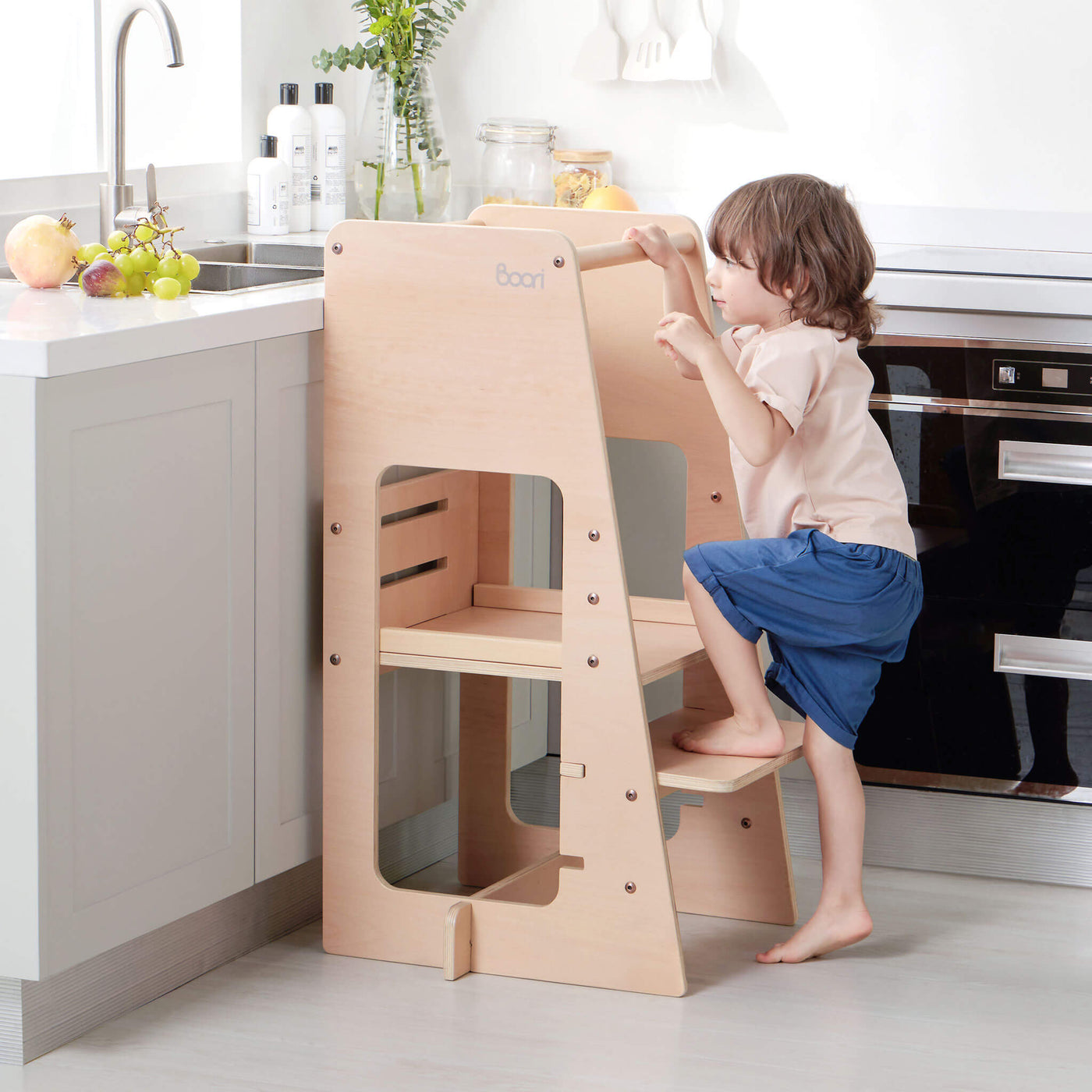
Here is the styling catch, though. Practical pieces like this are exactly where a coordinated room breaks – the tower arrives in some random pale pine that fights everything else. Boori makes both in finishes that match the rest of the nursery, so the useful kit never punctures the calm you built. You can browse Boori’s Montessori learning towers and climbing furniture in the same wood tones as the cot.
One finish that ages with the room
Here is the styling payoff that genuinely won me over. A nursery does not hold still – the cot becomes a toddler bed, the room reshuffles every couple of years – and most coordinated looks fall apart right there, because the original finish is long discontinued and the replacement never quite matches. Choose one finish that carries through, and the room evolves without breaking step. The tone you picked on day one is still the tone on the storage you add at year three, so it reads as one considered space, not a patchwork of phases. That is why a coordinated nursery looks better the longer you live in it. If a finish that ages cohesively appeals, start with Boori’s coordinating cots and grow-with-me beds in a single tone.
While the finish handles continuity, you handle the sightlines – the styling move people skip. Stand in the doorway, the spot every visitor sees first, and check what the eye lands on. A clean wooden headboard? Calm. A tangle of cables? Noise. Then crouch to your baby’s eye level and look again: their sightline runs low, so keep that band uncluttered and the room reads serene from both heights. Angle the cot away from a busy doorway, line the low shelves square to the wall, and leave one clear sightline running across the floor. The furniture coordinates the colour; you coordinate what the eye travels across.
Layer storage and texture for a restful room
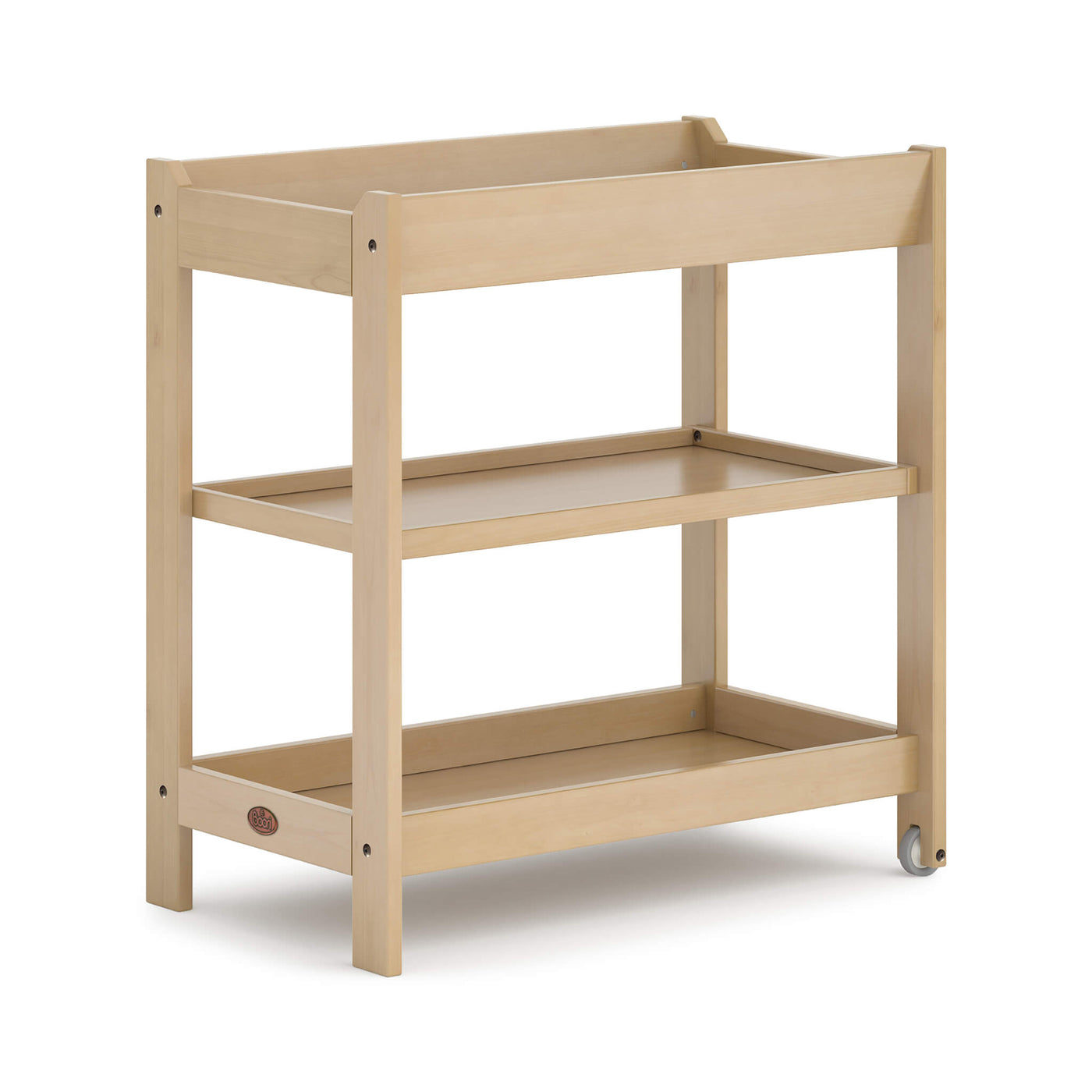
Storage is the unglamorous hero of every calm nursery, because visible clutter is just visual noise. The trick is to give everything a home that closes – drawers, baskets, a changer with tiers that swallow the muslins you did not know you needed. A three-tier changer earns its keep doing two jobs in one footprint, in your chosen finish.
Quick calm-nursery checklist
- Pick one finish (Barley White, Almond or Cherry) and repeat it across every piece.
- Leave real floor space between sleep, change and play zones.
- Match the wood tone to the light: warmer tones for north-facing rooms.
- Add texture, not colour: a knit blanket, a wool rug, a linen curtain.
- Check your sightlines from the doorway and at your baby’s eye level.
Now, texture – the styling lever that does the real work. Once your wood tones are coordinating, you add softness through materials, not louder colours. A chunky knit throw. A wool rug your baby can roll on. Linen curtains that filter the light. Keep the palette quiet – creams, oatmeals, the odd sage or dusty clay – and let the texture, not the colour, do the cosiness. A coordinating storage piece anchors it all, and Boori’s nursery storage and changers slot straight into the finish you already chose.
The honest verdict
So did the sceptic come around? Mostly, yes. A coordinated, solid-wood nursery genuinely feels calmer to be in, and it stays that way for years because the finish never goes out of step. The one honest flaw I will name? A single repeated finish, left to do all the work, can tip from calm into cold – that flat, ‘catalogue’ look where the room reads styled but not lived in. The fix is not less coordination; it is more texture. Under-layer the timber with knit, wool and linen and the room warms back up. Skip that step and a perfectly matched nursery can feel a little showroom.
Would I do it again? Without hesitation. Build around one finish, layer texture over colour, mind your sightlines, and the room stays restful from day one to the homework-at-a-desk years. That is the whole secret, and it is simpler than the mood boards make it look.