







Let me be honest about where I started. When I read “solid wood nursery furniture,” I assumed it was marketing. A nicer word for the same flat-pack box everyone buys, with a friendlier price tag attached somewhere down the line. I was wrong, and figuring out why sent me down a genuinely useful rabbit hole about what babies actually breathe, sleep against, and pull themselves up on for the first two years of their lives. So what does “solid wood” really mean once you stop and look closely?
Here is the short answer. It is not a finish. It is not a veneer glued over something cheaper. It is a structural choice that changes the glue, the off-gassing, the lifespan, and whether the thing can survive a toddler who treats furniture like climbing apparatus. That last part matters more than the brochure photos suggest. If you want to see the range I kept circling back to while researching this, you can browse the Boori solid wood collection here and follow along.
What to check before you buy any cot (the 30-second version)
Ask three questions. What is the frame actually made of – solid wood or chipboard and MDF? What is the finish, and is it tested safe for the mouthing stage? And will it convert as your child grows, or is it landfill in three years?
Solid timber, a non-toxic tested finish, a low anti-tip centre of gravity, and a real conversion path. Get those four right and the rest is styling.
Solid wood vs the flat-pack box: what is really inside
Most budget nursery furniture is not wood at all in the way you picture it. It is engineered board – chipboard or MDF – made from wood particles and dust bound together with adhesive, then wrapped in a printed laminate that looks like timber. The structure is the glue. And the most common glues in that category have historically been urea-formaldehyde based, which can release formaldehyde gas slowly over time as the board sits in a warm room.
Why should a new parent care about that? Because a nursery is a small, often warm, often closed room where a tiny person sleeps twelve to sixteen hours a day with their face inches from the surface. Solid wood furniture, by contrast, is exactly what it sounds like. Boards milled from real timber, joined with far less adhesive, finished rather than laminated. Boori hand-selects its timber from certified sustainable plantations and laser-measures each piece to cut waste before it is even cut. That is a different object entirely from a printed particleboard panel.
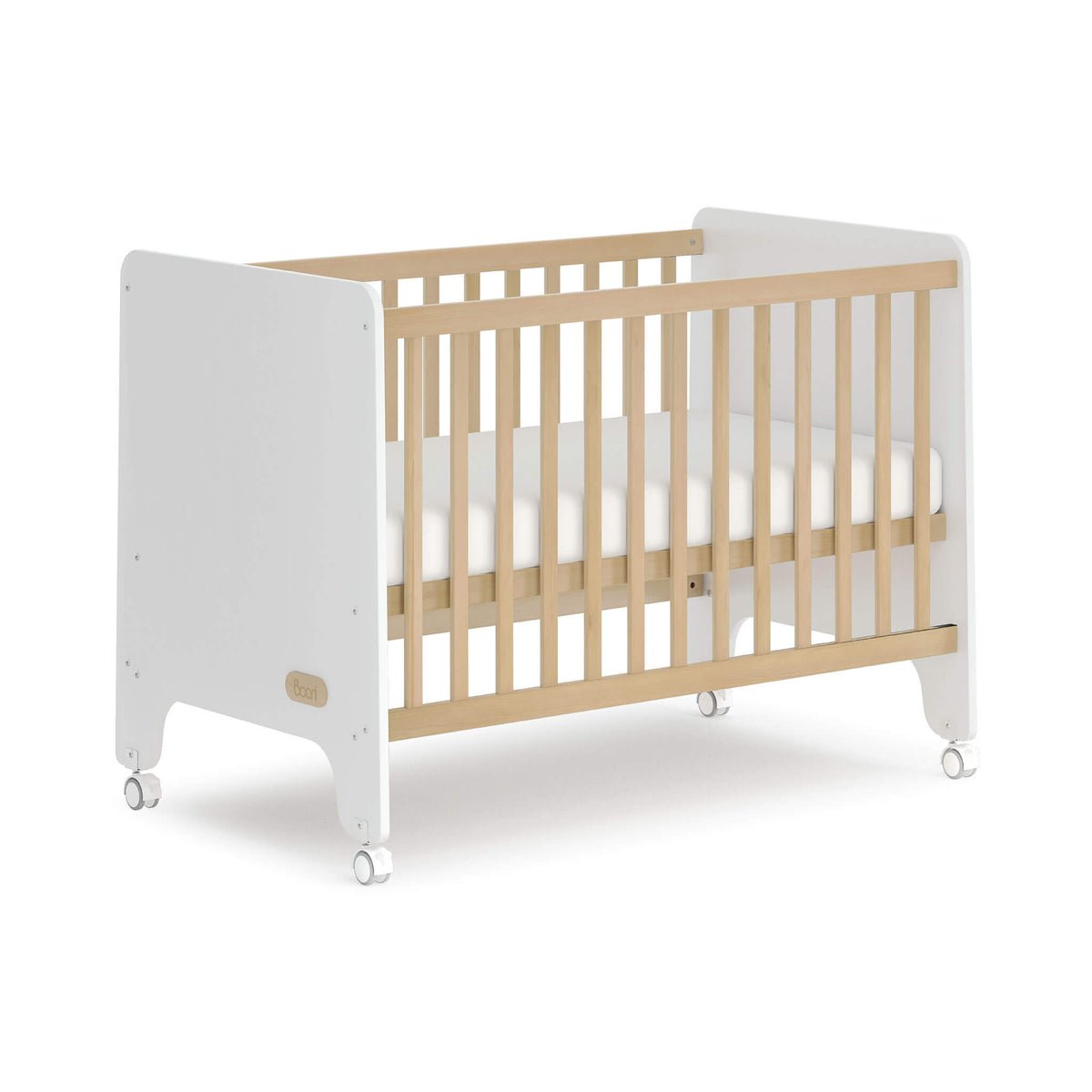
Does this mean every flat-pack cot is dangerous? No, and I want to be fair here. Modern board has improved, and reputable brands meet emissions limits. But “meets the limit” and “barely off-gasses anything” are not the same promise. With solid wood you are simply starting from a material that has very little to release in the first place. Here is how the two genuinely compare across the things that matter in a child’s room.
| Solid wood (e.g. Boori) | Chipboard / MDF flat-pack | |
|---|---|---|
| Core material | Real milled timber | Wood particles bound by glue |
| Adhesive / VOC load | Minimal – little to off-gas | Higher – laminated board, more glue |
| Durability under a toddler | Takes knocks, sands, repairs | Chips, swells if wet, screws strip |
| Repairability | Sand, refinish, re-tighten joints | Damage is usually permanent |
| Resale / hand-down | Holds value, lasts a second child | Often binned after one child |
Look at the repairability row again. That is the quiet one people skip. A solid wood cot that gets a chewed rail or a scuffed corner can be sanded and refinished. A laminated board with a chipped edge is just a chipped board forever. You can compare the solid wood cots and beds directly here if you want to feel the construction difference yourself.
The finish is the part babies actually touch
Here is something I had not properly thought about until I had a baby in the house. They chew the cot. Not occasionally – constantly, during teething, gnawing on the top rail like it owes them money. So the finish on that rail is not a cosmetic detail. It is the surface your child puts in their mouth daily for months. Which means the safest material in the world still needs a safe finish on top of it.
This is where the coordinating Boori finishes – Barley White, Almond, Cherry – are doing more than looking nice across a nursery. A good nursery finish should be low-emission and tested for the mouthing stage, not just wiped on for the photo. The point of a brand that controls its own factory is that the finish is part of the spec, not a corner cut by a third party you have never heard of.
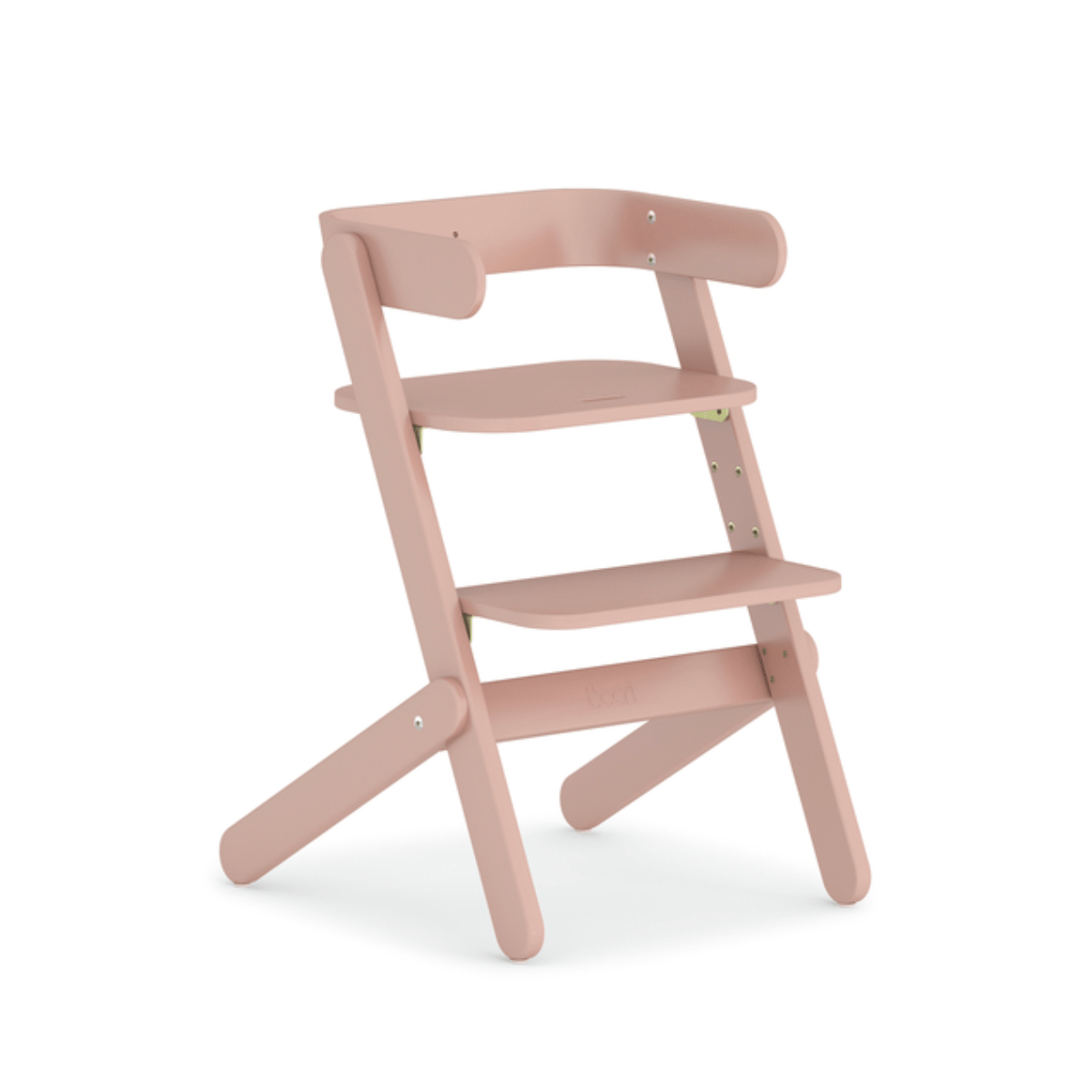
Think about the highchair specifically. It catches every spill, every flung spoon of puree, every wipe-down three times a day. A laminated board edge that swells when wet is a real problem there. Solid wood with a proper sealed finish shrugs it off. Want to see how the wooden highchairs are built? Take a look at the Boori feeding range and notice the sealed surfaces.
Your baby does not read the spec sheet. They just chew the rail. The finish on that rail is the spec sheet that actually matters.
Stability and anti-tip: the safety nobody photographs
Tip-over is one of the genuine furniture hazards in a home with small children, and it is depressingly easy to underestimate. A child pulls themselves up. They climb. They hang off a drawer like it is a ladder. Lightweight furniture with a high centre of gravity goes over far too easily, and the heaviest items – wardrobes, drawer units – are exactly the ones a toddler loves to scale.
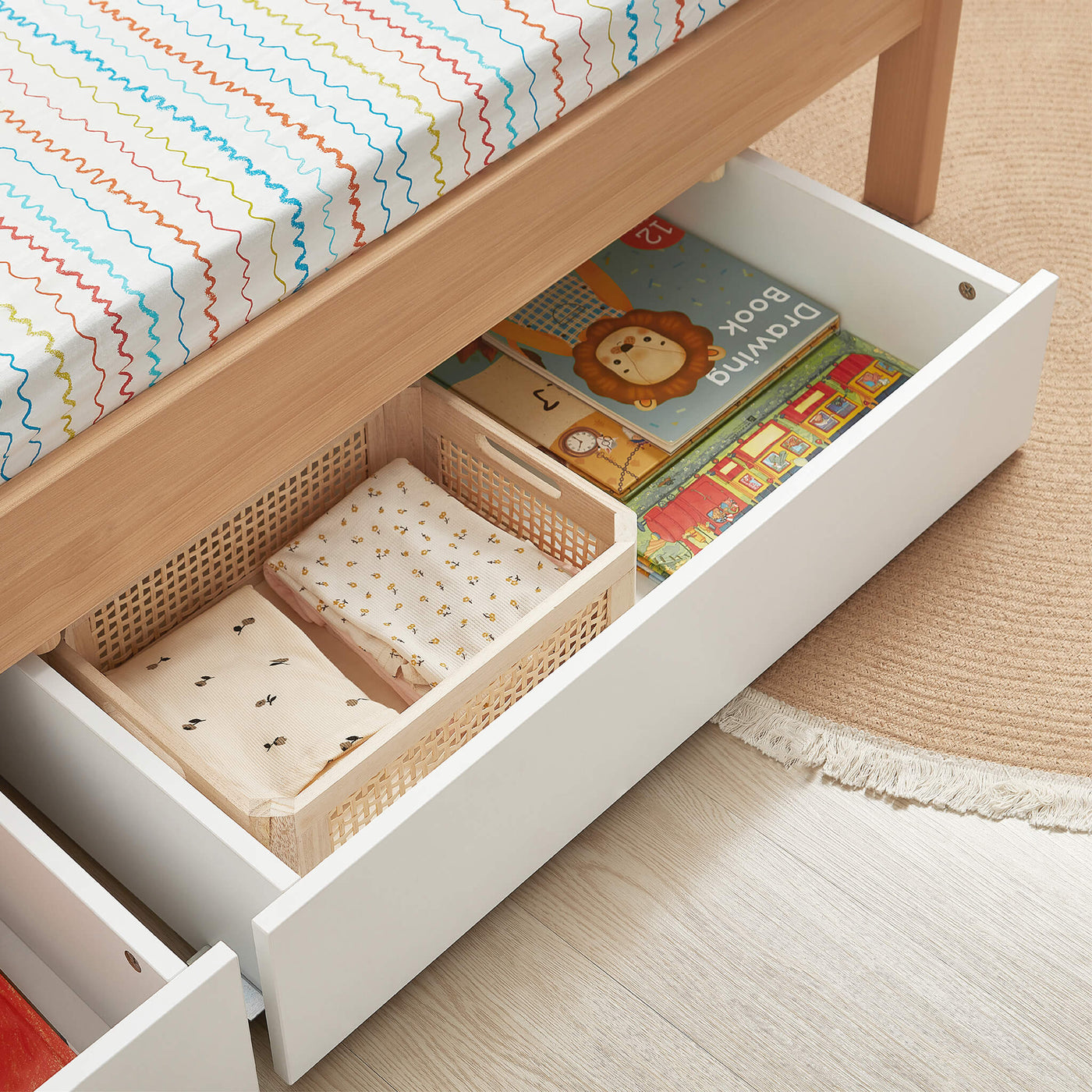
Solid wood helps here in a way that is almost boring, which is why nobody markets it. It is heavier and denser, so the same drawer unit sits with a lower, more planted centre of gravity. That does not replace wall-anchoring – please still anchor everything tall – but it stacks the odds in your favour. Storage that is genuinely solid, like the under-bed drawers below, also resists the racking and wobble that loosens flat-pack joints over a couple of years.
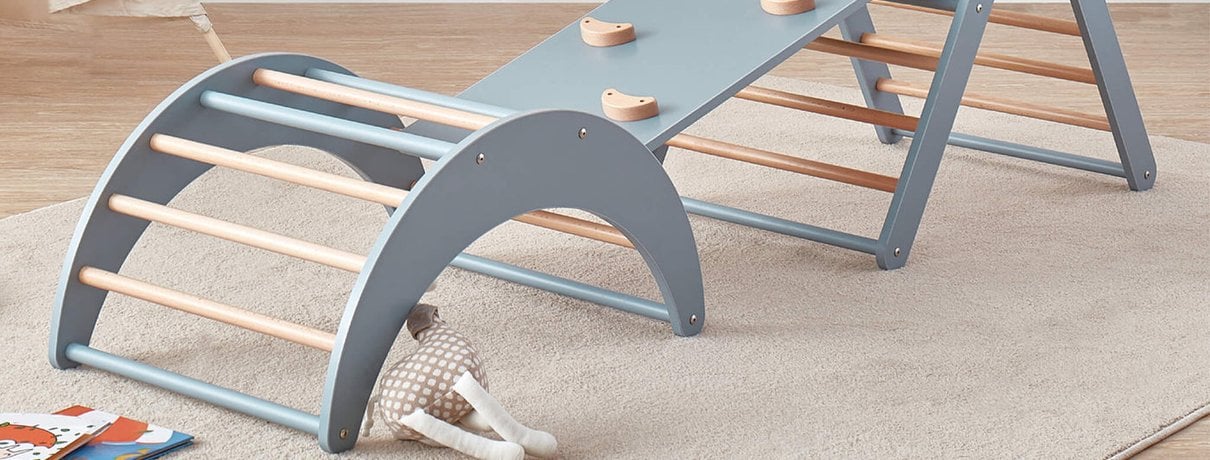
And honestly, this is where active toddlers change the brief entirely. Once they are mobile, your furniture is a climbing frame whether you approved it or not. Boori leans into that with Montessori learning towers and climbing furniture designed to be climbed safely, on purpose, rather than fighting a losing battle against it. You can see the Montessori and climbing pieces here if you have a little mountaineer at home.
Sustainability that is not just a sticker
Plenty of brands stamp “eco” on a box. So what actually makes solid wood the more sustainable choice, rather than the more expensive-sounding one? Two things, and they reinforce each other. First, the sourcing. Boori uses timber from certified sustainable plantations, hand-selected and laser-measured to cut waste before milling. Second, and this is the part people miss, longevity is itself sustainability. A cot that converts and survives two children is not in landfill.
That second point is the whole game. A flat-pack cot that gets binned after one child has an enormous footprint, no matter how the box was labelled. A solid wood cot that converts to a toddler bed, then gets handed to a sibling, then sold on, spreads its impact across years and children. The convertible “grow with your child” design is not a gimmick – it is the sustainability story.
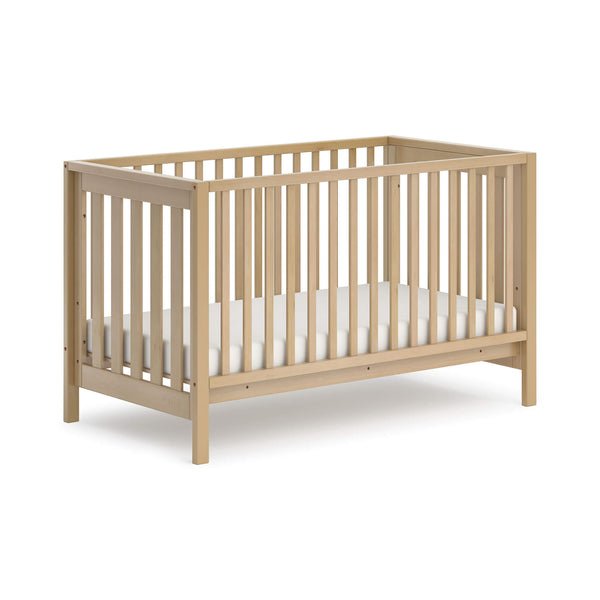
There is a control story underneath all this too. Boori owns its purpose-built factory and runs production end to end, with heritage going back to 1993 – over three decades of making this one category. Why does owning the factory matter to you, a parent buying a cot? Because the brand can verify the timber, the glue, the finish and the joinery itself, rather than trusting a supply chain it has never visited. You can read more about the convertible cots and beds here.
One purchase, a whole childhood
Here is the bit that quietly reframes the price. Solid wood furniture that grows with your child is not really competing with a cheap cot. It is competing with the cheap cot, plus the toddler bed, plus the desk, plus the storage you would have bought separately. A cot that converts via a conversion kit takes you from newborn to school age on one frame. A height-adjustable desk grows with the child instead of being replaced.
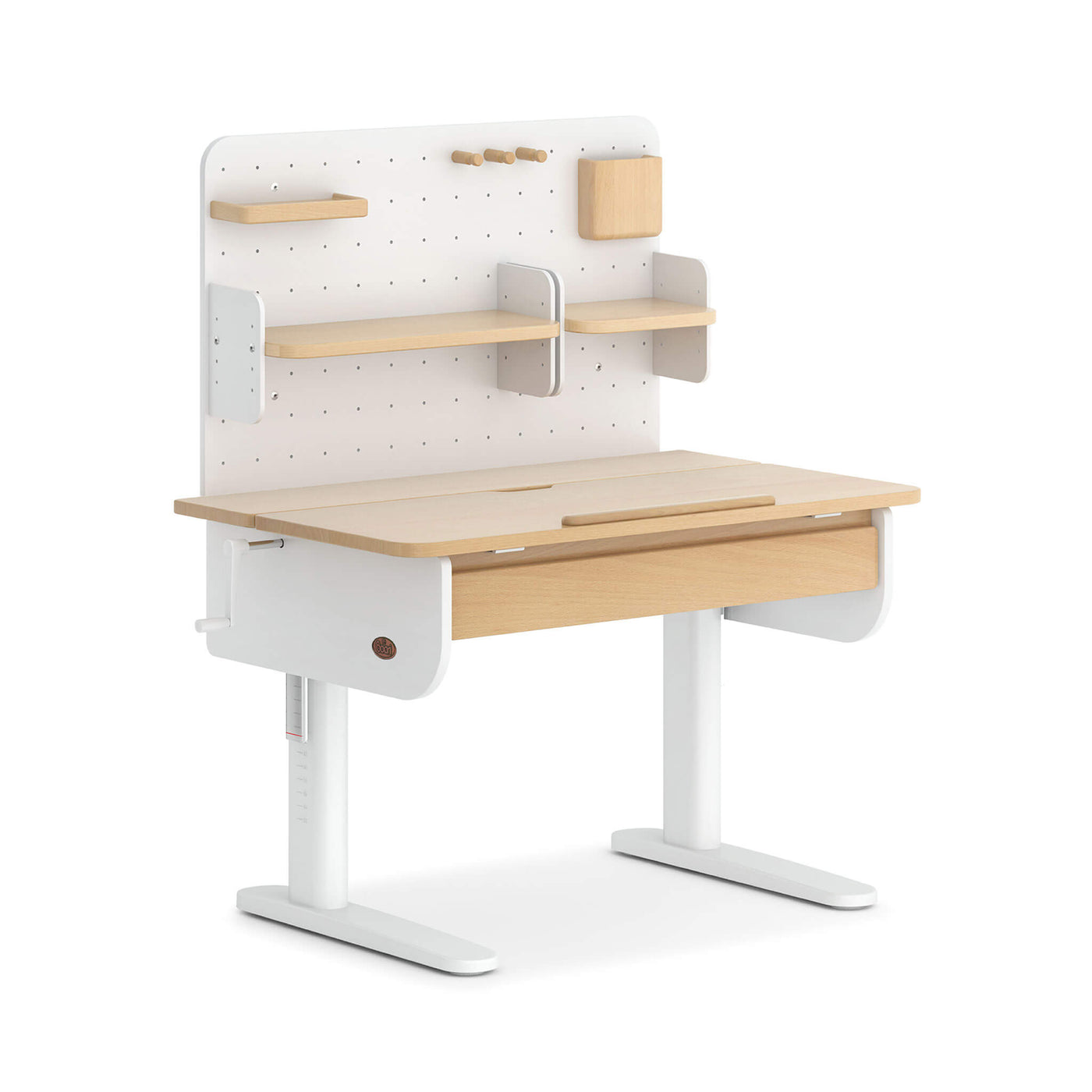
I will admit the maths only works if you actually keep the furniture, and not everyone does. But if you are the sort who hands things down, the per-year cost of a solid wood system genuinely undercuts a string of disposable replacements. Boori backs the range with one to five year warranties depending on the piece, and you register with the brand to activate cover. Coordinating finishes across cot, desk and storage mean the room still looks intentional as the child grows. Browse the full grow-with-your-child collection here.
The honest verdict
What genuinely won me over
Real timber with little to off-gas, finishes built for the mouthing stage, a heavier and more stable build, certified-sustainable sourcing, and one cot that converts across a whole childhood.
The one honest catch
Solid wood costs more up front. The value only lands if you keep it and hand it down. Buy it to bin it in a year and you have overpaid.
So where did I land after all the cynicism? Solid wood in a nursery is not marketing fluff – it is a real material decision that touches the air your baby breathes, the surface they chew, the stability of what they climb, and the waste you eventually create. Boori does the unglamorous parts well: the sourcing, the owned factory, the conversion path, the warranties. None of that photographs as well as a styled shelf, which is exactly why it gets overlooked.
My one real reservation stands, and I will not pretend otherwise: the higher up-front price only pays off if you are genuinely in it for the long haul. If you are, the case is honestly compelling. Trusted by over a million parents, free mainland-UK delivery, and a range that runs from cot to highchair to desk to climbing tower. Ready to build a nursery that lasts? Start with the Boori solid wood collection here and choose the pieces you will still be glad you bought in five years.