







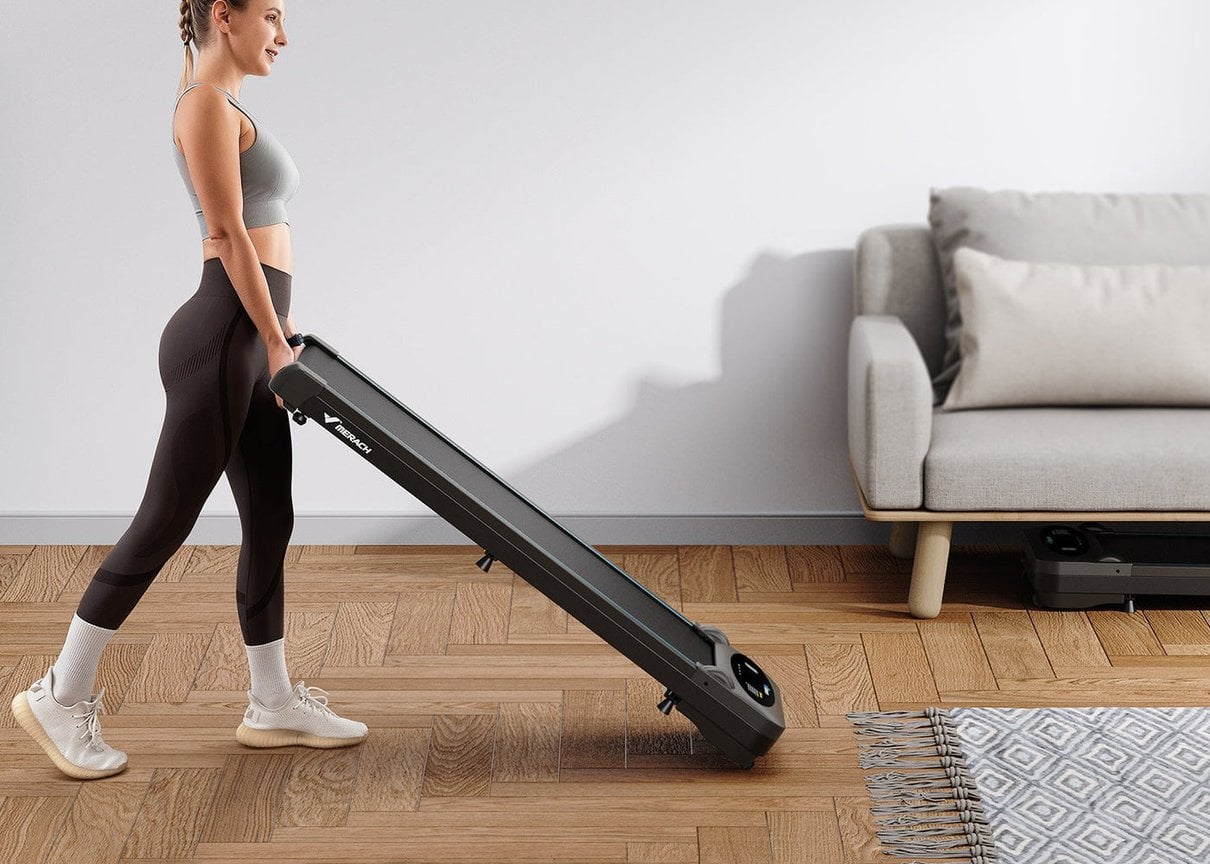

Choosing home cardio is partly about the workout and partly about whether the machine will earn its floor space after the first burst of enthusiasm.
Merach’s UK range spans connected indoor bikes, recumbent bikes, rowers, treadmills and ellipticals. The product pages make a clear case for screens and guided training, but that does not mean every model suits every household or that app features should decide the purchase on their own.
We reviewed the available product information to weigh the range’s strengths against the practical checks a buyer should make: fit, comfort, workout style and ongoing reliance on connected features.
Disclosure: this post includes affiliate links, and we may be paid a commission on purchases made through them.
The short version: Merach is most compelling for people who want a dedicated indoor cardio machine with a more guided, screen-led experience. The Merach Indoor Exercise Bike with HD Screen is the clearest match for that brief; the Merach S19B1 Recumbent Exercise Bike serves a different comfort priority, while the Merach R28R1 Water Rowing Machine changes the workout and space equation. The trade-off is that screens, connected services and substantial equipment all ask for room and commitment.
What does Merach do well for home cardio?
The product range covers several kinds of indoor movement rather than asking every buyer to choose the same format. That breadth is useful: cycling is familiar and easy to scale, a recumbent bike places the rider in a supported seated position, and rowing recruits a different movement pattern. There are also treadmills and ellipticals for shoppers who prefer walking or low-impact stepping.
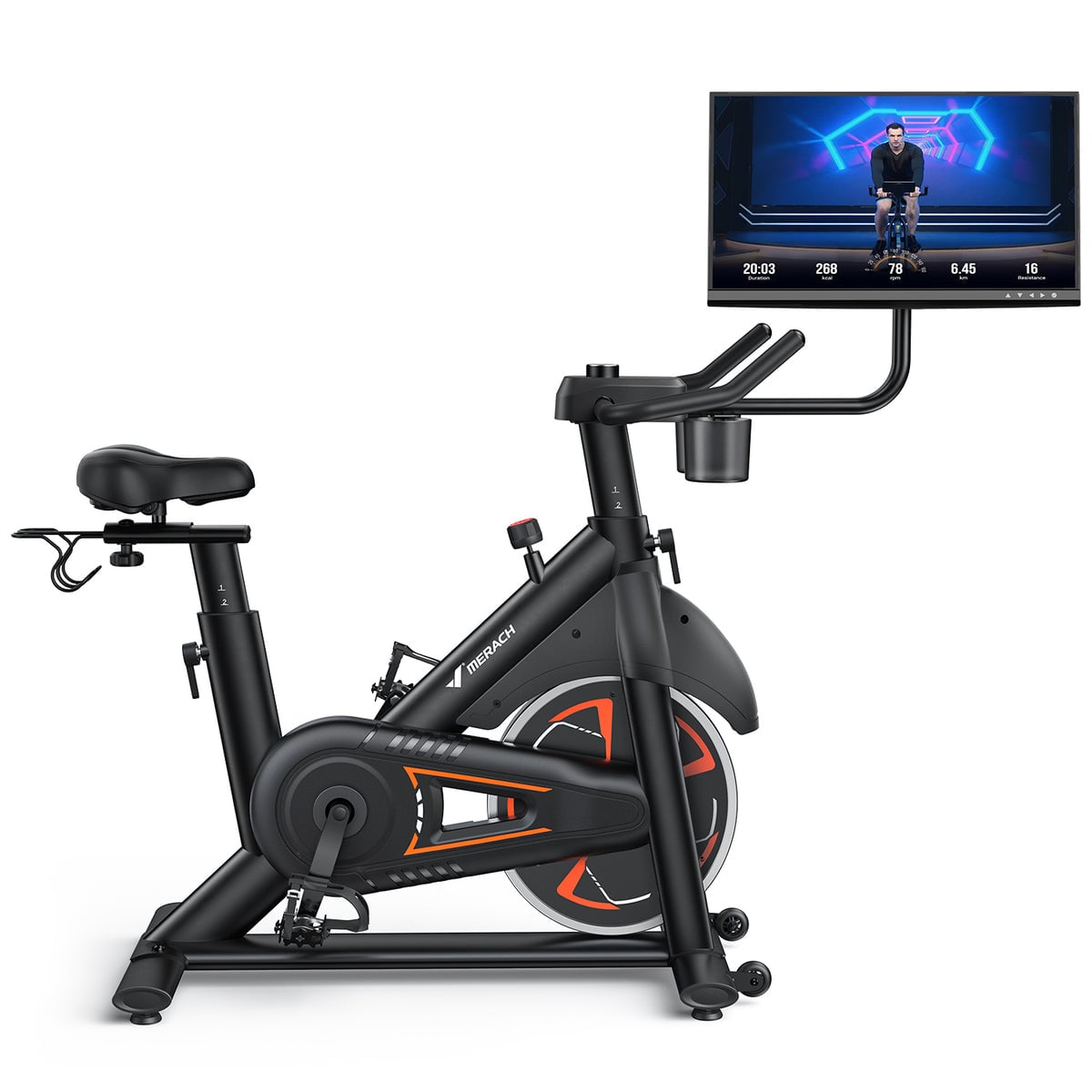
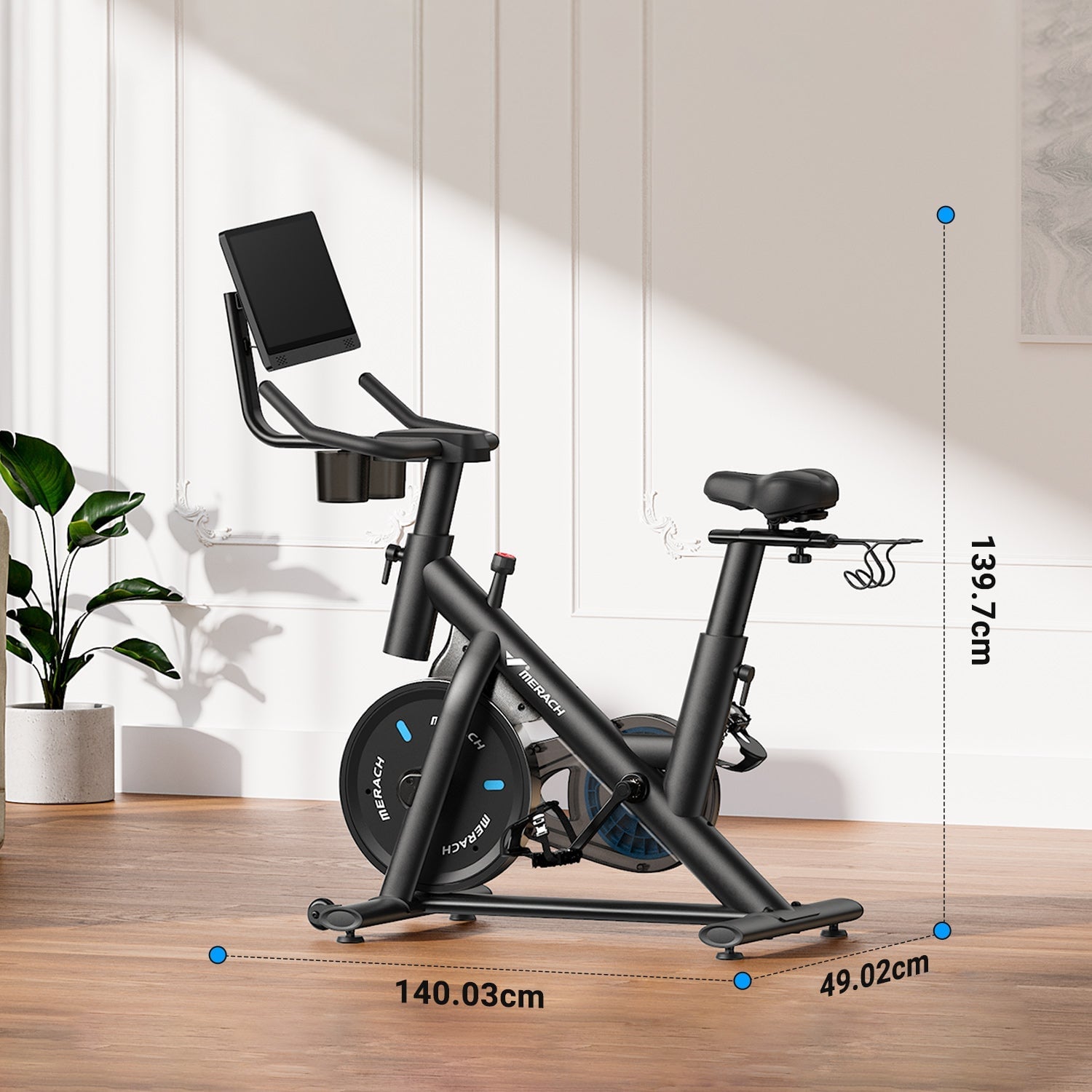
Across some models, the brand foregrounds guided, screen-led sessions. The connected bike listing describes a 21.5-inch HD display that rotates 180 degrees and tilts 60 degrees, alongside 16 automatic magnetic resistance levels. That combination suggests a bike intended to make sessions feel structured and varied. It is a product-page specification, not proof that the screen or classes will suit every rider.
- Format choice: bikes, recumbent bikes, rowers and other cardio equipment support different movement preferences.
- Adjustable effort: automatic magnetic resistance on the connected bike gives riders multiple intensity steps.
- Setup claims: the connected bike page says it arrives 80% pre-assembled, which may reduce initial assembly work.
- Stated policies: UK product pages state free shipping, 30-day returns and a 24-month warranty; read the current terms for exclusions and process details.
Those are credible reasons to shortlist the brand. Still, a generous feature list can make a machine look more universal than it is. The right test is whether the format matches the activity you can picture repeating, not whether the spec sheet is the longest. Compare the connected bike listing with the S19B1 details if you are still weighing bike positions.
Is the connected bike a good fit for screen-led cycling?
The Merach Indoor Exercise Bike with HD Screen is the range’s strongest example of a bike built around guided sessions. The listing highlights the large rotating display and automatic magnetic resistance. A screen that turns can also be useful if a household uses the bike area for other guided workouts, although the page’s hardware description alone does not establish which content is included, whether access requires a subscription, or how long services remain available.
For buyers who like a class-like prompt, this could help remove the small friction of deciding what to do next. Resistance changes also let a session move between easier and harder efforts without relying solely on a manual dial. The feature set will matter less to someone who prefers their own playlist, a simple timer or outdoor riding. Review the current connected bike specifications and screen details before deciding how central those features are.
There are practical questions to settle before choosing a connected bike. Measure the footprint and clearance around the machine, check the screen’s viewing position from your riding posture, and confirm connectivity requirements. Also look for details about user height range, maximum user weight, seat adjustment, pedals and power needs on the live product page. Do not infer a fit from the product photos.
We would shortlist the connected bike for a buyer who wants indoor cycling to feel coached and visually engaging. It is a less obvious value for someone who will ignore the display or who has limited space and simply wants the smallest possible way to pedal.
Would the S19B1 suit a comfort-first rider?
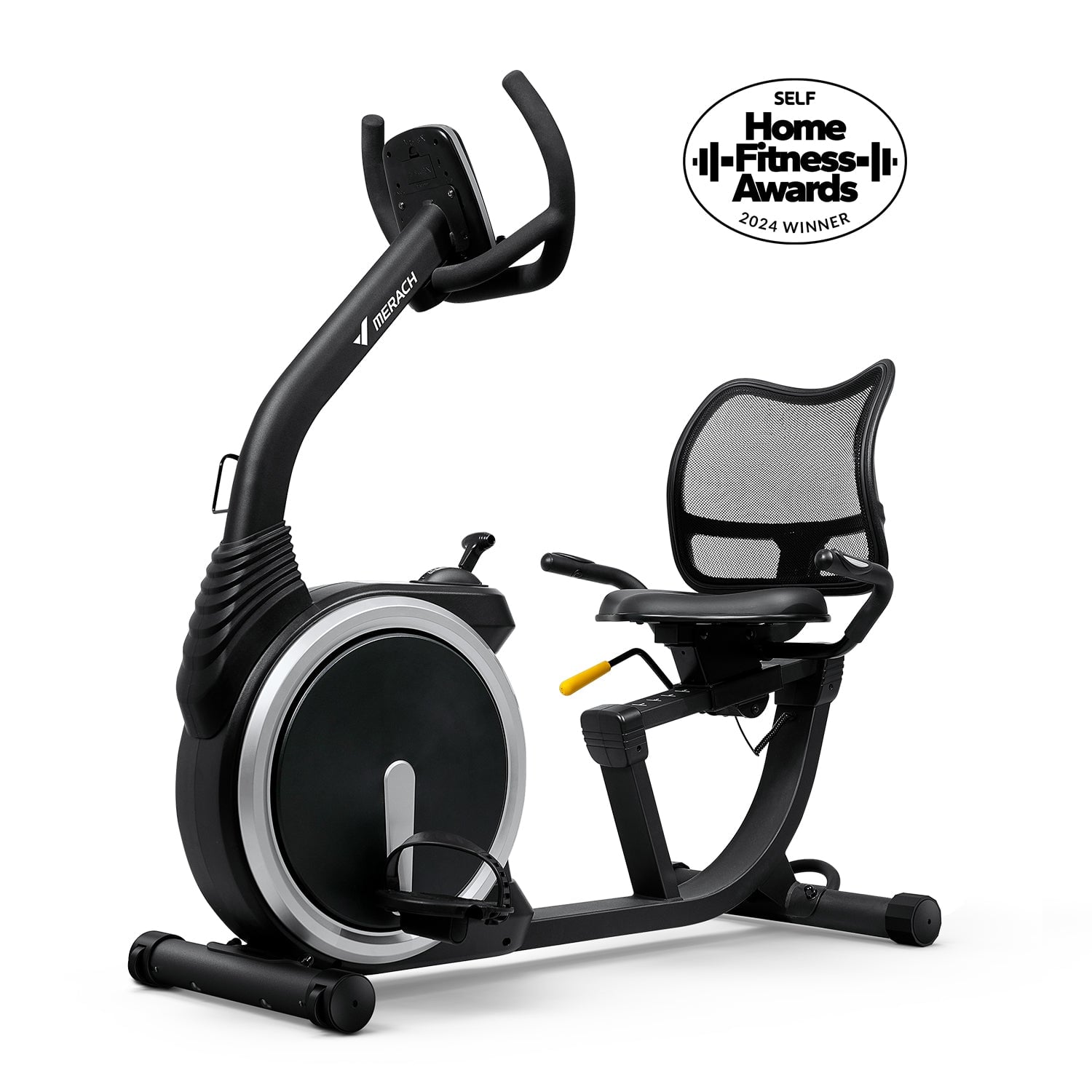
The Merach S19B1 Recumbent Exercise Bike is a different proposition. A reclined, supported seat can appeal to people who prefer a less upright cycling position, and it can feel more approachable for steady indoor movement. The product listing identifies it as a recumbent bike; shoppers should check its adjustment range and dimensions rather than assuming the seat will suit their body or room.
Recumbent design is a use-case choice, not a blanket comfort guarantee. Seat support, reach to the pedals and the ease of getting on and off all matter. If you are comparing it with an upright connected bike, think about the position you are most likely to sustain for a session, as well as whether you want a large screen to be part of that routine.
The S19B1 is more convincing for someone prioritising a supported seated ride than for a buyer chasing a class experience. Use its product page to check fit details and the listed adjustments against the intended rider. The product information available here does not tell us enough to recommend it for a particular medical or rehabilitation need; anyone buying for that reason should seek appropriate professional guidance and review the manufacturer’s specifications carefully.
- Measure the intended location, including space to approach and leave the bike.
- Compare seat, handle and pedal adjustments with the rider’s needs.
- Check whether the listing describes a console or connected feature you will actually use.
- Read the current delivery, return and warranty terms before checkout.
When does the R28R1 rower make more sense?
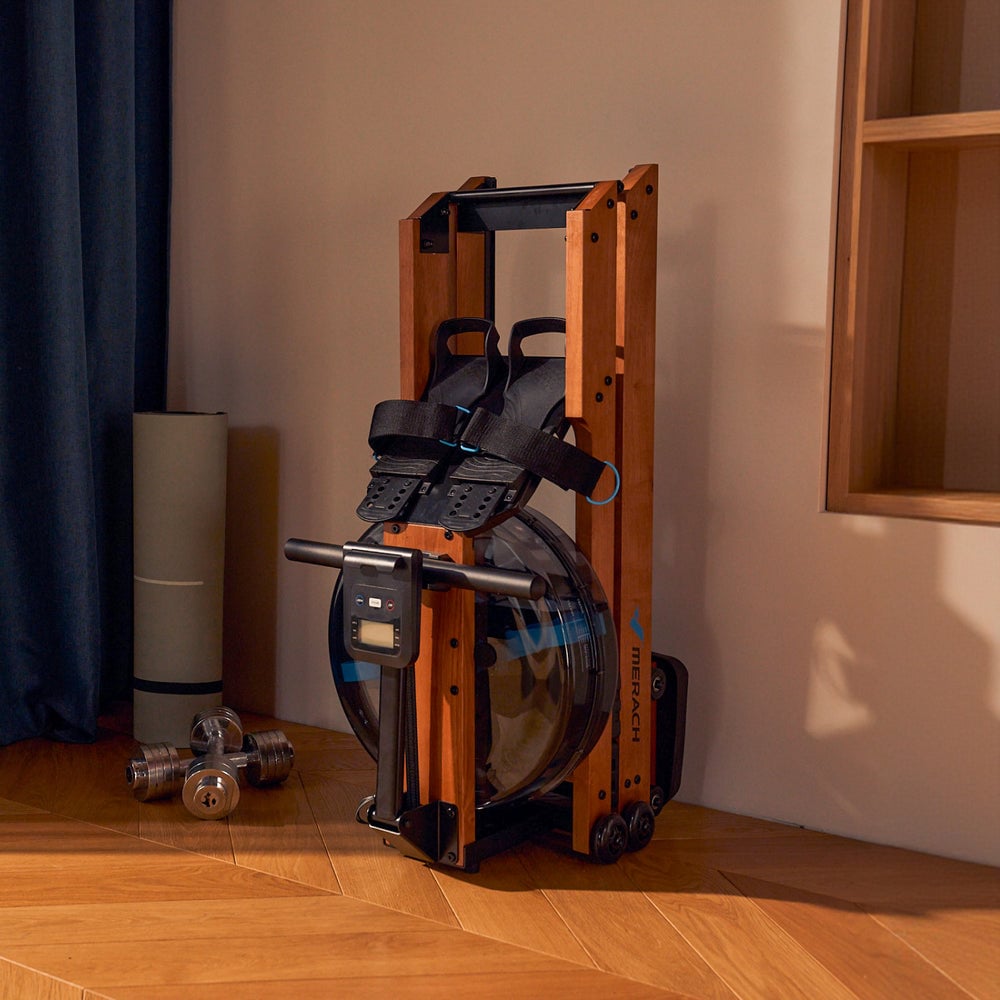
The Merach R28R1 Water Rowing Machine offers a markedly different session from either bike. Water resistance is the defining feature in its name and positioning, giving the rower a distinct feel from magnetic resistance. Rowing can make sense for a buyer seeking a whole-body cardio movement, but technique and a comfortable range of motion matter more than they do for a basic pedalling session.
A rower also changes the room calculation. Check its assembled footprint, storage arrangement, tank maintenance instructions and whether the user can move through the rowing stroke without hitting furniture. The product page is the right place to confirm dimensions and any folding or storage claims. A machine that can be stored vertically may still need clear space while in use.
This is the pick to investigate if you specifically want rowing and have room to use the machine properly. Check the R28R1 product listing for dimensions and the current setup information. It is not an automatic upgrade over a bike: the movement is less familiar to some people, and a buyer who dislikes rowing will not be rescued by a water tank.
How should buyers compare the formats?
It helps to compare these machines by the job they do in a household rather than treating every feature as a score in one contest. An upright bike is a relatively straightforward way to build a repeatable cardio slot. The connected bike adds a visual training focus, so it makes most sense when riders want sessions to be guided. Check the connected bike product page for the current specification and whether the display package matches your expectations.
The recumbent S19B1 is easier to distinguish by position. Someone who dislikes leaning forward may find this format worth exploring, while a buyer seeking a more immersive class setup may prefer the upright bike. Review the S19B1 dimensions and adjustment information carefully, because even a supportive design needs to fit its user.
The R28R1 changes both the movement and the way the machine occupies a room. It is not simply another cardio station with a different resistance setting. Rowing involves coordinated leg drive and upper-body movement, so beginners should be comfortable learning technique and checking setup guidance. The R28R1 listing can answer practical questions about its footprint, while its product details should clarify the care required for its water system.
Before narrowing the shortlist, write down the dimensions of the available area, including the route through the room and any storage position. Decide whether other people will use the machine and whether they need different adjustments. Then rank the things you will genuinely use: display, resistance controls, seat support, storage or movement variety. This makes it easier to avoid paying attention to a headline feature that does not solve the household’s main problem.
- Choose the connected bike if guided cycling and its rotating display are real priorities.
- Explore the S19B1 if a recumbent position better suits the intended rider.
- Consider the R28R1 if rowing is the activity you want and there is room for its full use.
Those are shortlist cues, not guarantees. A product page cannot tell us how comfortable a particular saddle feels over time or whether a screen’s content will keep an individual engaged. The best choice is still the one that fits the buyer, the floor plan and the routine.
What are the limits buyers should weigh?
First, the best-known features are not a substitute for core fit information. Screen size and resistance levels are easy to notice, but dimensions, user limits, adjustment range, noise, assembly and warranty conditions can decide whether a machine works in a real home. Confirm those details on the exact product page because specifications and terms may vary across models.
Second, connected hardware can add value only if the buyer wants to use it. Before paying for a large display, find out which training content is included, what requires an account or recurring payment, and whether core machine functions remain available without an internet connection. The store’s claims should be checked against current product and service terms.
Third, large exercise equipment is a commitment. Returns may be subject to eligibility, condition or collection requirements, so a stated return window should not be read as a guarantee that trying a machine at home is friction-free. The same applies to shipping and warranty language: review the current UK policies and keep order records. Open the bike listing, recumbent listing and rower listing for model-specific terms.
Finally, product choice cannot create a routine by itself. It helps to decide in advance when the machine will be used, where it will live, and what a realistic first few weeks look like. A simpler model that fits the room and habit may be the better purchase than a feature-rich one that remains folded away.
- Check the live listing for full measurements and rider limits.
- Confirm screen content, connectivity and any ongoing costs.
- Read return, warranty, delivery and assembly terms for that model.
- Choose the movement you are most willing to repeat.
Ready to choose a Merach machine?
Our recommendation is conditional but clear: start with the workout, then the features. The connected bike is the strongest fit for buyers who actively want screen-led cycling and automatic resistance; the S19B1 is worth considering when a recumbent riding position is the priority; and the R28R1 belongs on a shortlist only if rowing is genuinely appealing and the room can accommodate it.
Merach’s range has useful variety and visible product specifications, but online listings cannot settle comfort, fit or the appeal of connected training for an individual household. Compare the current product details and policies on the UK store before making a decision.