







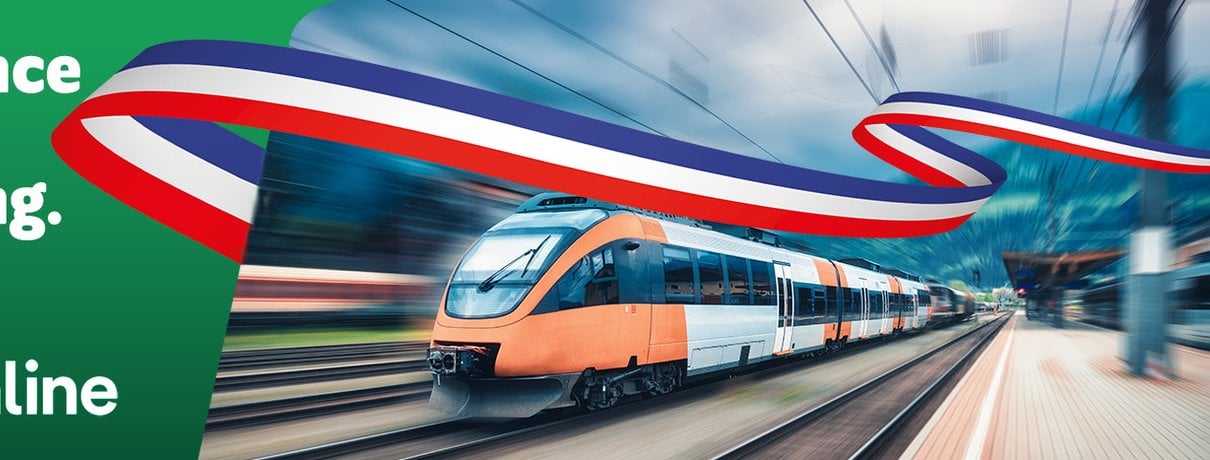

Want to reach France without taking a car? Irish Ferries’ Ireland-France Sail & Rail offer is an interesting route to consider, but the useful question is how much of the journey it actually organises for you.
We reviewed the information on the official UK-region pages. The proposition is simple at first glance: take the ferry from Dublin to Cherbourg, then continue by train. The details matter, because the rail leg is booked separately and you are responsible for making the connection work.
Disclosure: this post includes affiliate links, and we may be paid a commission on purchases made through them.
The short version: Ireland-France Sail & Rail can suit car-free travellers who are comfortable booking and coordinating a ferry and train separately. Eligible travellers may claim a ferry fare refund by emailing both booking references, subject to the terms. It is a useful framework, but not a single end-to-end ticket that removes connection planning.
For the official entry point, see the Ireland-France Sail & Rail overview and the current Dublin-Cherbourg sailing details.
What is included in Irish Ferries Ireland-France Sail & Rail?
Ireland-France Sail & Rail combines the Dublin-Cherbourg ferry crossing with onward train travel in France, with the rail booking made separately through Trainline. The ferry part uses Irish Ferries’ Dublin-Cherbourg route; the train leg is not automatically bundled into the same booking. Start with the official Ireland-France Sail & Rail page and read the Dublin-Cherbourg route information alongside it so the two stages are clear.
That separation is the defining feature. You can build a journey without driving, and choose rail onward from Cherbourg to match your destination, but the service does not appear to take responsibility for every transfer and connection. The brand’s page says eligible customers can claim a ferry fare refund by emailing both references. Treat that as an offer with conditions, not as an automatic reduction: check the current Sail & Rail terms before booking and retain the confirmation for both parts.
Irish Ferries also lists other France travel products, including Eurocamp Holiday Parks and the Dublin-Cherbourg crossing itself. These help explain the wider travel range, but they are separate choices rather than added inclusions in the rail offer.
- Ferry: Dublin to Cherbourg with Irish Ferries.
- Train: booked separately through Trainline.
- Refund: a claim may be available for eligible ferry fares when both references are emailed, under the published terms.
- Connections: the traveller coordinates timings and onward transfers.

Does the Dublin-Cherbourg crossing suit a rail itinerary?
The ferry provides the first leg, and the departure port is the key practical detail. A UK traveller cannot treat Dublin-Cherbourg as a direct sailing from Britain: getting to Dublin is part of the journey. For someone already in Ireland, or building a wider trip that passes through Dublin, the route may fit naturally. For a UK-based traveller whose priority is the shortest path to France, compare the extra travel to Dublin against a route that starts closer to home.
The Dublin-Cherbourg route page is the place to check current sailing patterns and journey details. Do not plan onward rail from a rough estimate alone. Allow a meaningful buffer between arrival and the train, then consider what happens if the ferry is delayed. Since the train is booked separately, it is especially important to understand ticket flexibility and the cost of missing a connection before choosing a tight itinerary.
For a slower, less brittle schedule, an overnight stay near the port or an intentionally generous connection could make the logistics more manageable. That adds time and possibly another booking, so it will not suit every budget or timetable. The basic advantage is a car-free crossing; the trade-off is that several moving parts stay in your hands.
- Confirm how you will reach Dublin port and when you need to check in.
- Check the ferry arrival details for the date you are considering.
- Choose a train with a buffer that accounts for transfer time and disruption.
- Read the train ticket’s change and missed-connection terms.
- Keep both booking references and the refund instructions together.

How does the booking experience work?
The booking path is best understood as two reservations and one possible claim. First, review availability and conditions for the ferry on the Irish Ferries pages. Separately, use Trainline to find the rail journey that continues from Cherbourg. Then, if your bookings meet the offer criteria, follow the brand’s instructions to submit both booking references for the ferry fare refund.
That is more hands-on than buying one through-ticket, but the steps are at least legible. The official Sail & Rail page should guide you through the current process. Before paying, check that the names, dates and destinations line up across both reservations. Save copies of each confirmation and take a screenshot or note of the applicable refund conditions; these are practical safeguards, not a substitute for following the current instructions.
One limitation deserves emphasis: the refund is conditional. Do not assume it applies to every fare or arrives automatically just because both bookings exist. Check what counts as eligible, what details must be included in the email and any claim deadline. If a clause is unclear, contact Irish Ferries before committing to a non-flexible rail ticket.
Compared with a single packaged ticket, this arrangement gives you more control over the onward train but also creates more admin. That makes it a better fit for travellers who already compare timetables and keep travel documents organised than for someone hoping to make one booking and forget about it. Revisit the ferry offer instructions and the route page together before finalising either reservation.

Who is Sail & Rail most useful for?
Car-free travellers are the clearest audience: people who prefer to continue by rail and do not need a vehicle at their French destination. It can also appeal to those who value a ferry crossing as part of the trip and are comfortable stitching together separate bookings. A flexible itinerary with a buffer is more compatible than a schedule where every connection has to work precisely.
It is less compelling if reaching Dublin adds a major detour, if you are travelling with bulky equipment that is awkward to move between stations, or if your destination is difficult to reach by train. Families and groups should consider how much luggage they can manage through transfers, while anyone with accessibility needs should check the ferry and rail arrangements directly before booking. The word “rail” alone does not guarantee that every interchange will be easy.
There is a different decision for people who want a longer stay. Irish Ferries’ Eurocamp Holiday Parks selection presents named campsite options such as Domaine de Drancourt, Château Lez Eaux and La Bien Assise. Those are accommodation choices to assess separately, and the best fit depends on the destination, facilities and journey from the port. They do not solve the train transfer question for a traveller without a car.
For example, a stay at a park could make sense after the crossing if it is near your route and you have onward transport arranged. Use the Eurocamp overview to see the named properties, then verify location and facilities on the individual booking details. Do not assume the campsite stay is included in Sail & Rail; it is a separate product with its own availability and terms.
- Good fit: car-free travellers with time to coordinate separate reservations.
- Potential fit: people starting in Ireland or already planning a Dublin stop.
- Less suitable: travellers needing one protected ticket for every leg.
- Check carefully: groups with accessibility, luggage or tight-connection requirements.

Compare the Eurocamp parks listed by Irish Ferries only if you are also arranging a separate stay; it is not bundled into the rail itinerary.

What are the strongest points and the limits?
The strongest point is the clear car-free combination: ferry to France, then a separately selected train. The potential ferry fare refund gives eligible travellers another reason to compare the offer, and a single brand page brings the ferry and rail idea together. For someone who wants to avoid driving and has flexibility, that is a coherent starting point.
The limits are equally concrete. The train booking is separate, so connection times, transfers and ticket flexibility need attention. Travellers in the UK must also account for getting to Dublin before the ferry. Finally, the refund depends on terms and a claim process, so the advertised structure is not as frictionless as an all-in-one ticket might sound.
Our recommendation is to shortlist it when you have a reason to depart from Dublin, want to travel onward by train and can give the connection room. If your priority is a protected end-to-end itinerary or the simplest possible departure from Britain, compare alternatives before deciding. Check the current Irish Ferries Sail & Rail details and sailing information against your own dates and onward destination.
Ready to plan a car-free France journey?
We would treat Ireland-France Sail & Rail as a promising ferry-plus-train framework for organised travellers, rather than a fully managed package. Its value depends on your starting point, the train timetable and whether the refund terms work for your bookings. Give yourself time to coordinate the pieces, and read both operators’ conditions before you reserve. The current terms page is the final reference for the claim process.
The honest drawback is that Irish Ferries does not remove the connection risk: you arrange the rail leg and need to check the claim requirements yourself. If that trade-off suits your trip, review the official details and then compare the current sailing and train options for your dates.