







Planning a London day out and wondering whether Frameless is a proper gallery visit, a family attraction or something in between? The answer depends on whether you want to look closely at art, move through projected environments or build an evening around the venue.
We reviewed the venue’s published descriptions and visitor information to understand what the standard visit includes and where its optional formats fit. Frameless is built around projection-led presentations of familiar artworks, with separate residencies and add-ons that change the focus of a visit.
Disclosure: this post includes affiliate links, and we may be paid a commission on purchases made through them.
The short version: Frameless is best suited to visitors curious about seeing famous art re-presented across large-scale rooms, with sound and movement shaping the experience. Standard admission is the natural starting point; choose FRAMELESS Lates for an evening format, while The Art of You is a separate photo experience to consider only if that activity appeals.
What kind of art visit does Frameless offer?
Frameless describes its London venue as four permanent galleries with more than 40 artworks. Rather than arranging canvases along conventional walls, the rooms use large projections and sound to make the art feel enveloping. That gives the visit a clear visual hook, though it also means the experience is mediated by the room, animation and soundtrack rather than by viewing an original painting at close range.
The gallery themes help visitors work out whether that approach sounds appealing. Each room has a distinct curatorial theme, which gives the route more shape than a single continuous projection show. Beyond Reality centres surreal and dreamlike works, while Colour In Motion explores colour and brushwork. The World Around Us draws on landscapes and cityscapes; The Art of Abstraction groups artists around shape and form. Frameless names artists including Dalí, Bosch, Monet, Van Gogh, Rembrandt and Kandinsky across these themes.
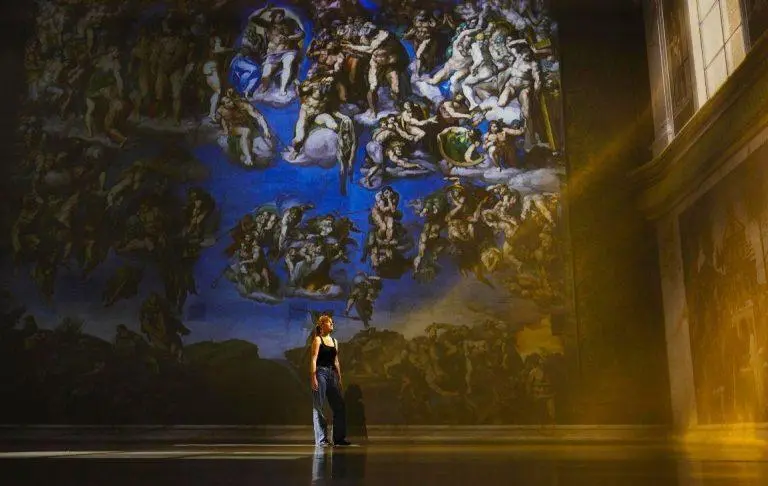
This format makes sense for visitors who enjoy a multisensory interpretation or want a visually led group outing. It may be less satisfying if your priority is quiet contemplation, labels beside original works or a traditional museum route. That distinction matters: the venue is selling an immersive interpretation of art, not a replacement for seeing the original objects in a collection.
- Choose it for projected environments and well-known art presented at scale.
- Expect a more sensory, shared atmosphere than a quiet gallery.
- Think of it as an attraction in its own right, rather than an art-history survey.
For a first visit, Standard admission is the straightforward place to begin, with the four galleries as the main reason to go. Allow enough time to move between rooms at your own pace, since the presentation depends on being inside each environment rather than scanning a sequence of objects. If you are deciding as a group, it may help to preview the artists and themes together: a visitor drawn to Van Gogh may respond differently from someone who prefers surrealism or abstract forms. The mix offers variety, though visitors with a particular artist or subject in mind should check the gallery descriptions first. Details on each room are available on the official Beyond Reality gallery page and Colour In Motion gallery page; the venue’s The World Around Us and The Art of Abstraction pages let you check the themes before choosing a date.
Is a changing residency worth building into the plan?
A residency gives the venue a more specific temporary focus alongside its permanent rooms. The published page for the Nikon Comedy Wildlife Awards Immersive Experience describes seven habitats and humorous wildlife photographs. The appeal is easy to grasp: familiar animal photography is framed in settings that echo its subject, making the exhibition feel distinct from the fine-art galleries.

A wildlife theme may suit visitors whose main interest is animals and photography; this is an editorial fit judgment, not a claim about the venue’s accessibility provisions. Frameless’ site calls it a limited run, so its presence is time-sensitive. Check the exhibition listing before planning around it, and confirm whether admission to the main experience is part of the ticket option you select.
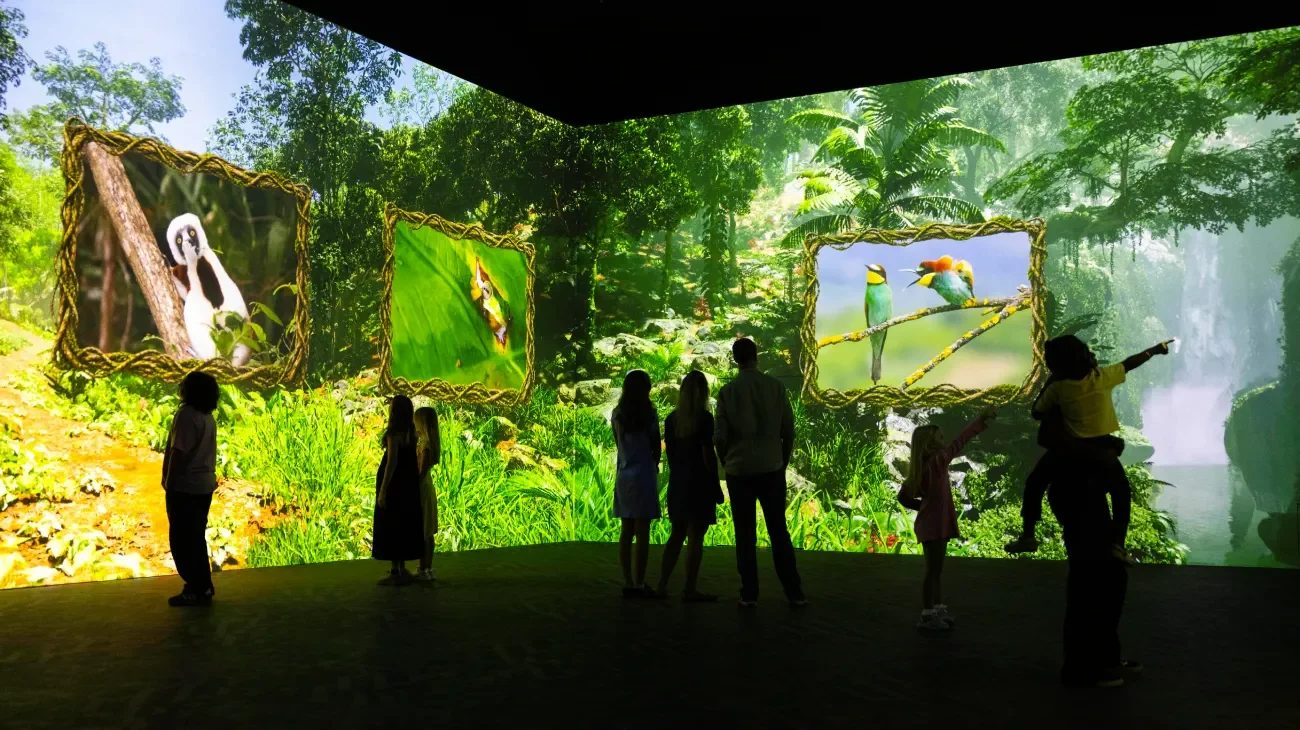
The trade-off is that a residency can be narrower than the four-gallery route. If the specific subject is not for your group, the temporary element may add little. We would treat it as a useful extra reason to visit, not the sole basis for a booking unless the wildlife theme is already a draw. The official exhibition listing is the place to verify current availability and details.

When does FRAMELESS Lates make more sense?
FRAMELESS Lates is the venue’s after-hours format for adults. The main distinction is timing and audience: it lets visitors make an evening of the galleries rather than fitting them into a daytime itinerary. For a date night or an adult group outing, that can be a more natural frame than a standard daytime attraction slot.
It is not automatically a better version of the visit. The after-hours framing matters if you want an evening out; if you mainly want to explore the artworks, standard admission may cover your needs without tying the outing to a particular time of day. Check the Lates listing for the dates, entry details and any event-specific conditions, since those can shape whether it fits your plans.
- Pick Lates when evening timing is part of the appeal.
- Pick standard admission when you want the core galleries in a daytime plan.
- Check the event page for the particular session’s terms before booking.
The useful question is less “which is better?” and more “does the schedule improve the outing?” The Lates page and the venue’s opening hours can help you compare the available formats. If you are arriving from elsewhere in London, also check the current location and travel information before choosing an evening slot.
Is The Art of You a necessary add-on?
The Art of You Photo Experience is a separate participatory photo activity. That makes it different in kind from walking through the galleries: its value depends on whether you want an interactive, personal photo moment as part of the day. The official Art of You Photo Experience page gives the current description and explains how it fits alongside a visit.

We would not treat it as essential to understanding Frameless. Visitors focused on the four rooms can comfortably prioritise the core admission, while people who enjoy making and sharing personal images may find the add-on more relevant. The practical checks are whether it requires separate booking, how it fits your entry time and what is included in the chosen ticket. Consider whether everyone in your party wants to take part, too; an optional photo activity can make the outing feel more personal for one visitor and incidental for another. Keeping it separate in your planning makes the decision clearer. Those details can change, so use the venue’s own Art of You information rather than assuming it is bundled.
- Core art visit: prioritise the four permanent galleries.
- Evening atmosphere: look at FRAMELESS Lates dates.
- Personal photo activity: consider The Art of You if participation is part of the fun.
What should you check before choosing tickets?
Ticket options can change with date, time, residency and add-ons, so the official tickets and prices page should be your final reference. We have avoided quoting a fixed cost because it can vary by the option selected. Instead, compare what the ticket covers and whether the schedule works for your group.
- Decide whether the four permanent galleries are enough for your visit.
- Check whether a residency you care about is running on your chosen date.
- Compare daytime entry with an available Lates session if you want an evening.
- Review separate add-on details and accessibility information before booking.
That last check is worthwhile for any sensory-led attraction. Frameless publishes accessibility information, including details on accessibility provisions and Chilled Sessions. The site also has information for visitors who are deaf or hard of hearing and visitors with visual impairments. Check the current guidance against your own needs before making plans.
For a small group, the broad themes may be enough to choose; for a family or a visitor sensitive to sound and changing light, the details matter more. Frameless also lists food and drink information and frequently asked questions, which can resolve practical questions before travel.
Ready to choose a Frameless visit?
Our recommendation is to treat Frameless as a visually ambitious London attraction for people who enjoy art presented as an environment. Start with the four galleries, then add a residency or photo experience only when its subject matches your group; choose Lates when an evening visit is itself part of the plan. The main limitation is also the defining feature: projections and sound create spectacle, but they cannot offer the stillness or close looking of a conventional gallery.
Before booking, compare the current ticket inclusions, date availability and access notes on the official site. That small check should make it easier to decide whether the core visit is right for you or whether one of the separate formats adds something you will actually use.