







Choosing LED strip lighting is less about finding one perfect channel and more about deciding how visible the hardware should be, how much fitting work the room can take, and whether the strip itself suits the job.
We compared profile styles and strip options listed by BLT Direct, then set them against familiar alternatives such as surface-mounted fittings. The product pages provide useful dimensions and technical details, though the final choice still depends on the recess, strip width, driver and controls you need.
We compare the retailer’s product pages and specifications. Check the current listing for compatibility and availability before planning a project.
Disclosure: this post includes affiliate links, and we may be paid a commission on purchases made through them.
The short version: A plaster-in profile suits a flush finish when you can plan a recess, while a corner or surface channel suits a retrofit more readily. Of the listed options, V-Tac 3359 offers wider internal clearance than 3360 for compatible wider tape, V-Tac 3360 is the compact choice, and a ready-made batten is usually simpler when the goal is broad, practical room lighting.
What changes between a recessed channel, a surface profile and loose strip?
A profile houses LED tape, often behind a diffuser and end caps. It protects the strip, gives the edge a finish and can soften visible points of light. The channel changes the finish, not the strip’s output or colour.
A plaster-in profile is built into the wall or ceiling finish. BLT Direct describes it as a way to keep the channel from protruding, which suits a clean ceiling line. It takes more planning because the opening and plaster finish must suit the profile before the wall is closed. Browse the retailer’s plaster-in profile range alongside its recessed profile options if a flush edge is the priority.
Surface profiles sit on top of a surface, so they can be more realistic once decoration is already finished. Corner channels aim light along a junction such as beneath a cabinet or stair edge. Both are more visible than a recessed profile, so the channel becomes part of the room’s detail. A visible channel can still look deliberate when its position and colour are chosen with the surrounding joinery in mind.
Loose strip removes the channel, cover and diffuser. That can suit concealed accent lighting, but direct views may reveal individual LED points and adhesive edges. The retailer’s LED strip listings should be checked against a profile and cover rather than treated as a complete lighting system by default.
- Recessed profiles favour a flush finish, with more building work.
- Surface or corner channels suit visible retrofit routes.
- Bare strip is best reserved for concealed runs where the tape itself stays out of sight.
Which BLT Direct profiles suit a finished wall?
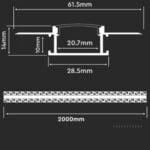
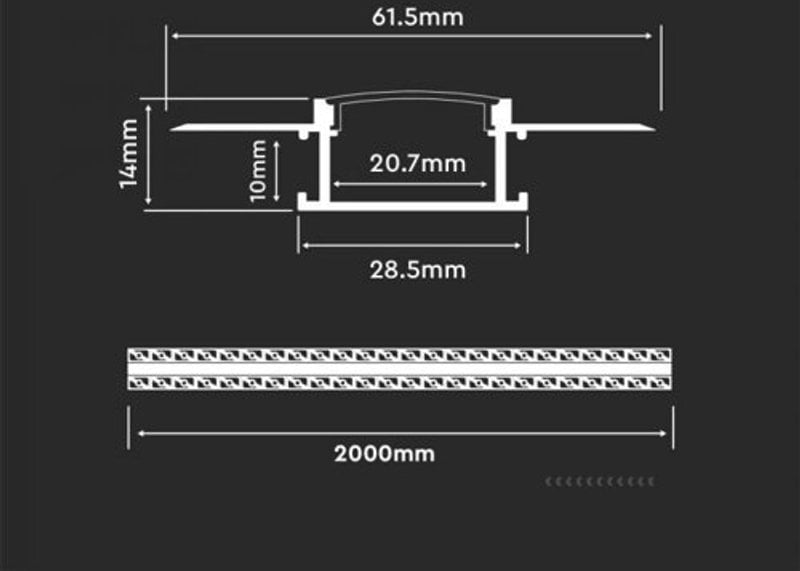
The 2m x 28.5mm x 14mm V-Tac Plaster In Silver LED Profile 3359 is the broader of the two plaster-in profiles compared here. BLT Direct lists an opal cover and end caps in the kit, with a 20.7mm internal width and 14mm depth. It leaves more room for a wider strip than 3360, but the recess still needs to fit. Its product listing is the place to confirm the complete dimensions and included parts.
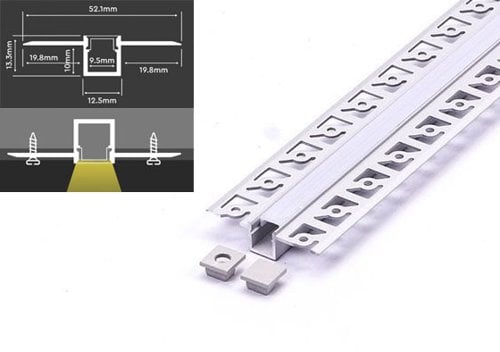
The 2m x 12.5mm x 13.3mm V-Tac Plaster In Silver LED Profile 3360 has a 9.5mm internal width, 13.3mm depth, and the same broad kit idea of an opal cover with end caps. It suits a narrow opening, but leaves less room for tape selection. Compare actual tape and internal widths, and allow for connectors and installation tolerance. The 3360 listing should be checked against the chosen tape before purchase.
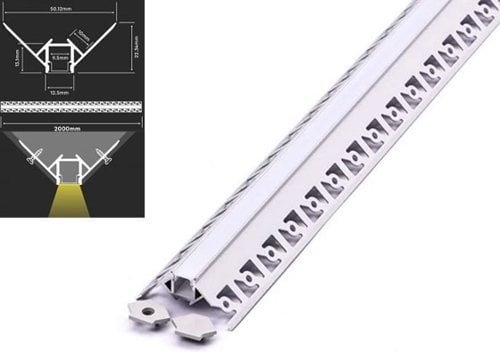
A third route is the 2m x 12.5mm x 13.1mm V-Tac Corner Silver LED Profile 3361. BLT Direct lists this as a corner format, so it directs light along a right-angle edge without a full recess. Check where it can be fixed and where its beam will land. Use the 3361 product page to verify its cover, dimensions and installation details.
These are not interchangeable kits. The 3359 gives the widest internal space among these examples, the 3360 is the narrowest wall channel, and 3361 moves the light into a corner. Each is listed with an IP20 rating, so do not treat any of them as a water-protected bathroom solution just because a room has a sink or shower nearby. Review the profile specifications and available cover types for the exact listing.
- Choose 3359 when the recess can accommodate its wider body and the strip needs more internal clearance.
- Choose 3360 when a narrower plaster-in line is more important than flexibility in tape width.
- Choose 3361 when the light should sit along a corner rather than disappear into plaster.
How do the strip options compare with a ready-made fitting?
A useful strip-light comparison includes the tape itself. BLT Direct lists the COB Spotless LED Strip 24V IP20 Very Warm White 2700K as a 24V, IP20, 10W-per-metre option. The listing identifies it as a COB Spotless strip, but that does not make it a standalone fitting: it still needs a compatible power supply, an installation plan and, where the tape will be visible, a suitable profile or diffuser. Check the COB strip listing for the exact specification and supply format.
The COB Spotless strip suits a warm accent line if its voltage, colour and protection rating fit. It is not a direct replacement for a ceiling fitting meant to light a whole room. Its 24V requirement matters: match the driver to the tape and run length, then check dimming compatibility. BLT Direct’s driver options may be separate from the strip.
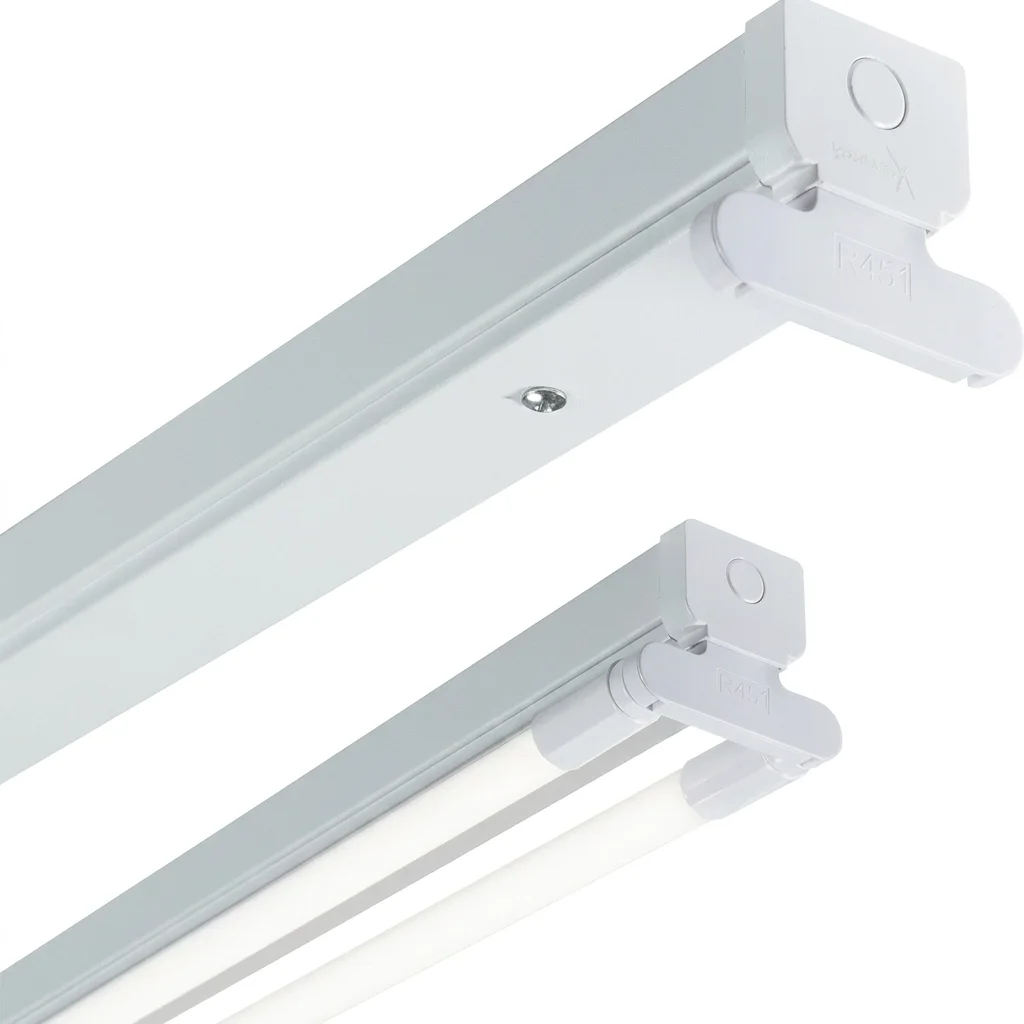
A batten or weatherproof fitting is simpler when replacing a conventional linear light: it is one defined product rather than tape, channel and driver to match. Its trade-off is visual. The fixture remains visible, while a profile can hide the source. A finished fitting is easier to specify, but a strip system gives more control over the light line.
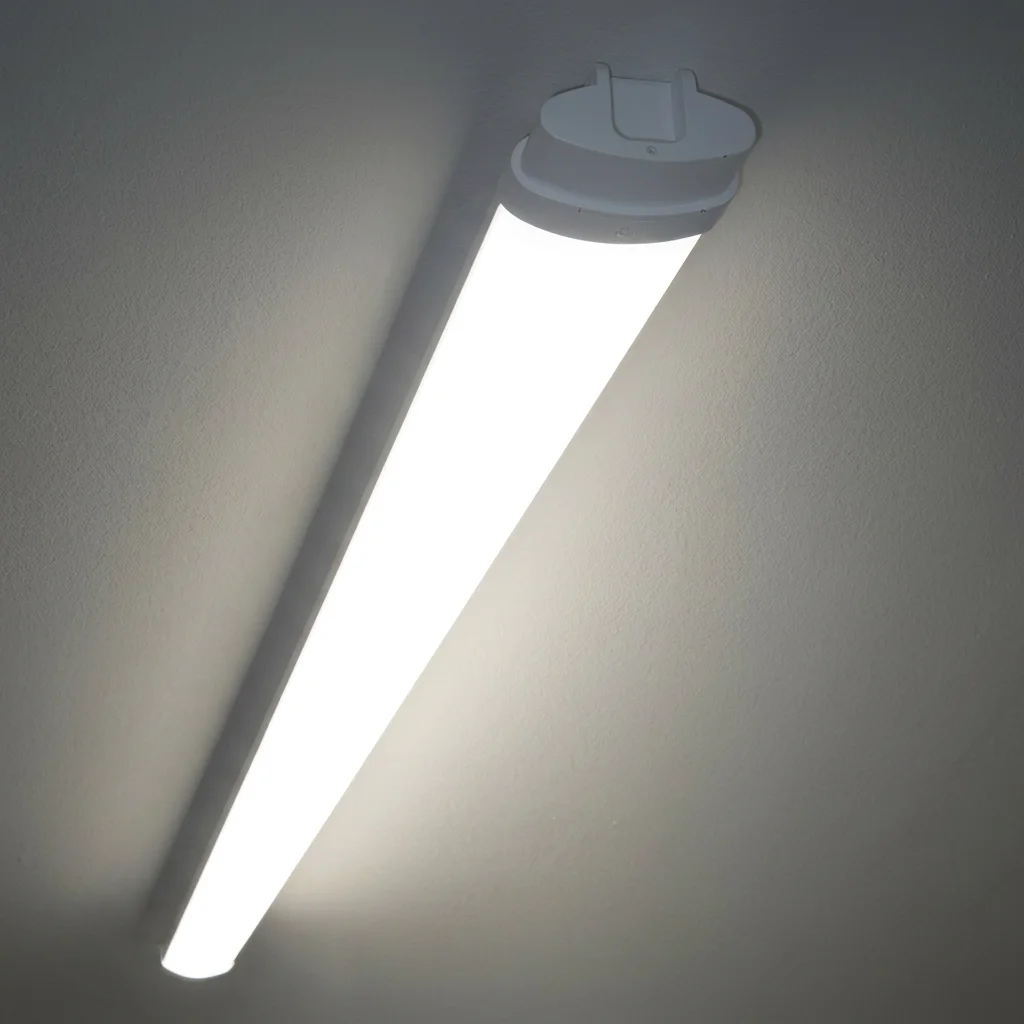
The profiles above are listed as IP20. The Eterna weatherproof fitting below is a different product type for a more exposed setting. Match the stated IP rating to the location and read the fitting instructions; appearance alone does not establish suitability.
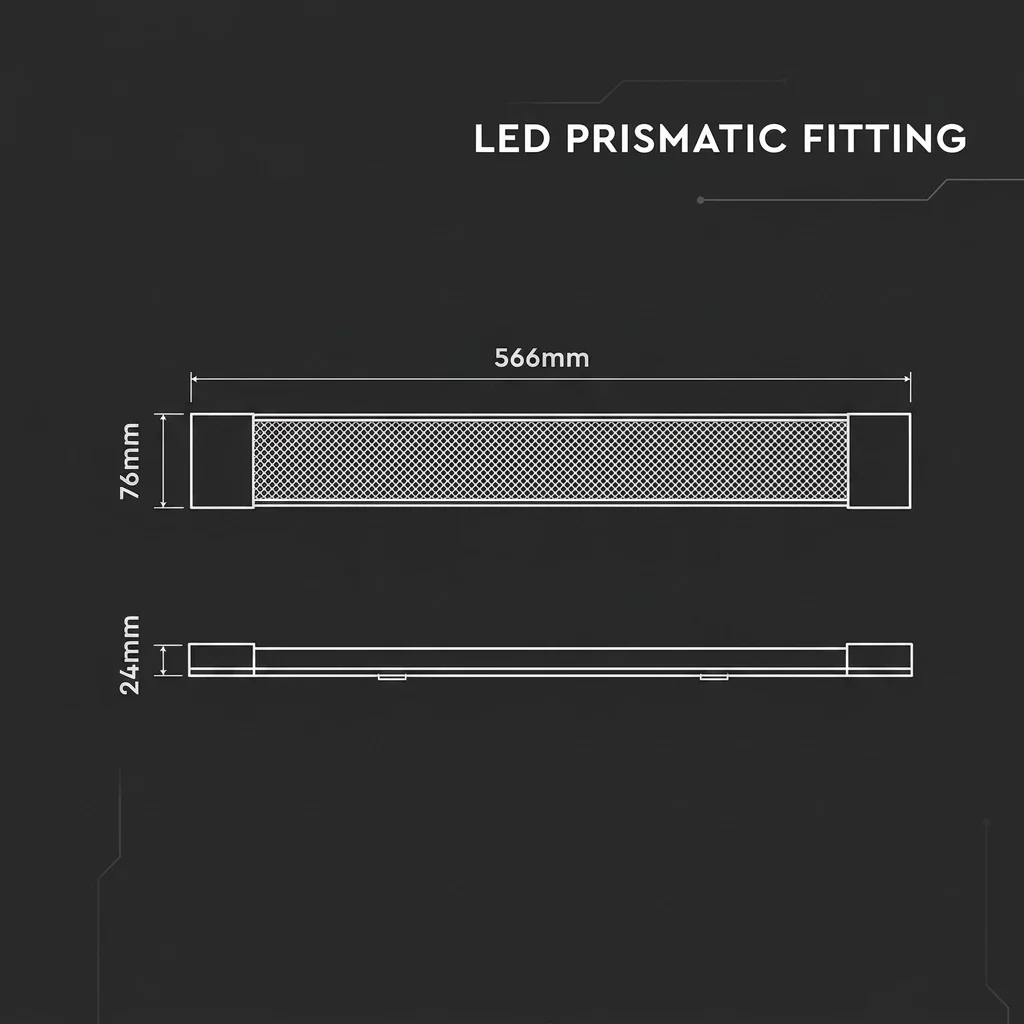
A batten makes more sense for broad, practical light where a visible fixture is acceptable. It is easier to specify as a single product, while a strip system gives more control over the light line. Check the current batten fittings against the profile dimensions and intended room use.
| Option | Best fit | Main advantage | Limit to check |
|---|---|---|---|
| V-Tac 3359 plaster-in profile | Planned flush detail | Wider internal channel with opal cover and end caps | Recess size and strip width |
| V-Tac 3360 plaster-in profile | Narrow recessed line | Compact channel with opal cover and end caps | 9.5mm internal width |
| COB Spotless 24V strip | Warm accent lighting | Continuous-looking tape, listed at 2700K | Driver, voltage and IP rating |
| Ready-made batten or weatherproof fitting | General or utility lighting | One defined fitting to position | Visible form and exact rating |
What should you check before ordering a strip system?
Start with the installation, not the finish name. A plaster-in profile needs an opening that suits its external dimensions, including room for the flange or surrounding finish. A surface channel needs a usable fixing surface. A corner profile needs a clear corner and a beam direction that makes sense. If the room is decorated, surface or corner options may save work; with walls open, a recessed channel may be easier. Installation timing changes the winner.
Then match the strip. Confirm the actual tape width against the channel’s internal width, as well as voltage, wattage, colour temperature and IP rating. The profile’s IP rating does not improve the strip’s, and a covered strip is not automatically suitable near water. The COB tape discussed here is IP20, and the profile listings are also IP20, so another product type is needed where the exposure calls for a higher rating. Compare each strip product detail with the profile compatibility information.
Next, map out the electrical pieces. A driver should match the tape’s voltage and total load, and the planned run should account for connection points and cut lengths. If dimming matters, confirm how the driver and control work together before ordering. BLT Direct lists related accessories alongside some products, but the individual strip, profile and driver pages are still the authority on what is included. The driver category, profile accessories and strip pages should all agree with your plan.
- Sketch where the light should fall before choosing the tape colour.
- Decide whether the channel can be recessed or must sit on the finished surface.
- Match tape, driver and controls before treating the parts as a complete kit.
- Measure the recess or mounting surface before settling on a profile.
- Check the tape width, voltage, power requirement and IP rating against the chosen channel.
- Confirm diffuser, end caps, connectors, driver and controls are included or separately needed.
- Check current stock, delivery details and return conditions on the exact product page.
Which setup wins by use case?
For a planned flush line, we favor 3359 when its wider internal clearance is useful and the recess fits its body. It includes the cover and end caps in the listing, but the channel’s dimensions make measuring non-negotiable. The linked 3359 product page gives the dimensions to work from, and its specification section is worth checking again before ordering.
For a narrow recessed detail, 3360 suits the job if the tape fits its internal clearance. For under-cabinet or edge lighting without a plastering project, the corner profile is more directly suited to the location. For a warm accent run, choose the COB strip only after pairing it with a compatible driver and deciding whether it needs a diffuser. Its listing details should be checked against the chosen channel dimensions.
For general or utility lighting with fewer components to coordinate, a batten or weatherproof fitting is the simpler practical winner. It remains visible, which may not suit a concealed scheme. That is the main aesthetic trade-off. The Eterna fitting pictured here represents that category; browse the BLT Direct fitting selection if you are replacing a fitting rather than creating an accent line.
Ready to choose a strip-lighting setup?
Our pick depends on the job: V-Tac 3359 for a planned flush detail with more tape clearance, 3360 for a narrower recess, 3361 for a corner, and COB Spotless tape for a warm accent line once its power and protection requirements are matched. Choose a batten or weatherproof fitting when simple general light matters more than hiding the source. Measure and verify compatibility first; a profile alone does not make a complete lighting system.
The honest limitation is that the right result cannot be settled from product names alone. The dimensions, strip width, driver, controls and exposure all need to line up with the real installation. Use the product pages as a final specification check, including what is supplied and current availability, then pick the format that suits the room rather than the one with the tidiest title.