







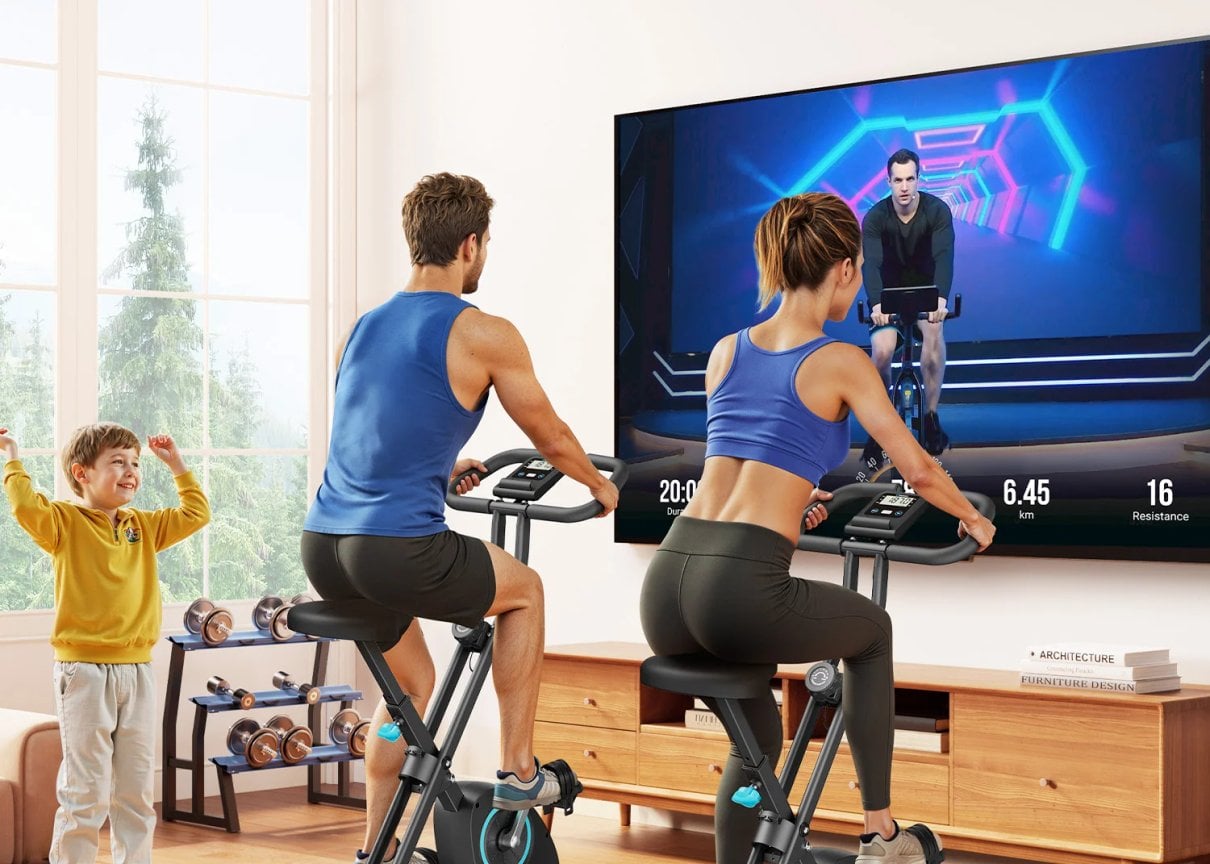

Home fitness equipment makes the most sense when it fits the movement you will actually make room for. For a first look at Merach, the useful question is how its different machines map to everyday routines.
The UK store covers several kinds of indoor cardio, alongside smaller strength and conditioning equipment. Its product pages put practical features such as storage, resistance, screens and deck cushioning alongside the headline format, so the range is best read as a set of choices for different homes rather than one signature machine.
We have used the UK store’s product information for this editorial overview. Specifications and availability can change, so check the live product page for the current details before deciding.
Disclosure: this post includes affiliate links, and we may be paid a commission on purchases made through them.
The short version: Merach brings walking, running, rowing and cycling equipment together with app and screen features across parts of the range. The strongest first step is to choose the movement and footprint that suit your home, then compare the exact model’s specifications and current availability on the UK store.
What does the range reveal about Merach’s approach?
The store’s breadth is the first clue. Rather than concentrating on just one training format, Merach presents treadmills, walking pads, rowers, exercise bikes and ellipticals. This makes it a brand for people deciding how they want to move indoors, whether that means a steady walk during the day, a more structured cardio session or a machine they can put away after training.
A second thread is the attempt to make equipment feel connected to a routine. Some pages highlight app compatibility, screens or casting, while others focus on resistance settings, cushioning or a more compact format. These are different answers to a common home-fitness question: what will make a machine usable in the space and schedule available?
That distinction is worth keeping in view. A screen may matter to someone who likes guided or entertainment-led sessions, but it adds little for a buyer who prefers a simple display and their own programme. Likewise, a foldable deck may be a practical benefit in a shared room, while vertical storage on a rower solves a different space problem.
- Movement first: select walking, running, rowing, cycling or elliptical training before comparing trim levels.
- Room second: check the full footprint, clearance and storage method on the exact model page.
- Features third: decide whether a screen, app connection or adjustable resistance will be part of your routine.
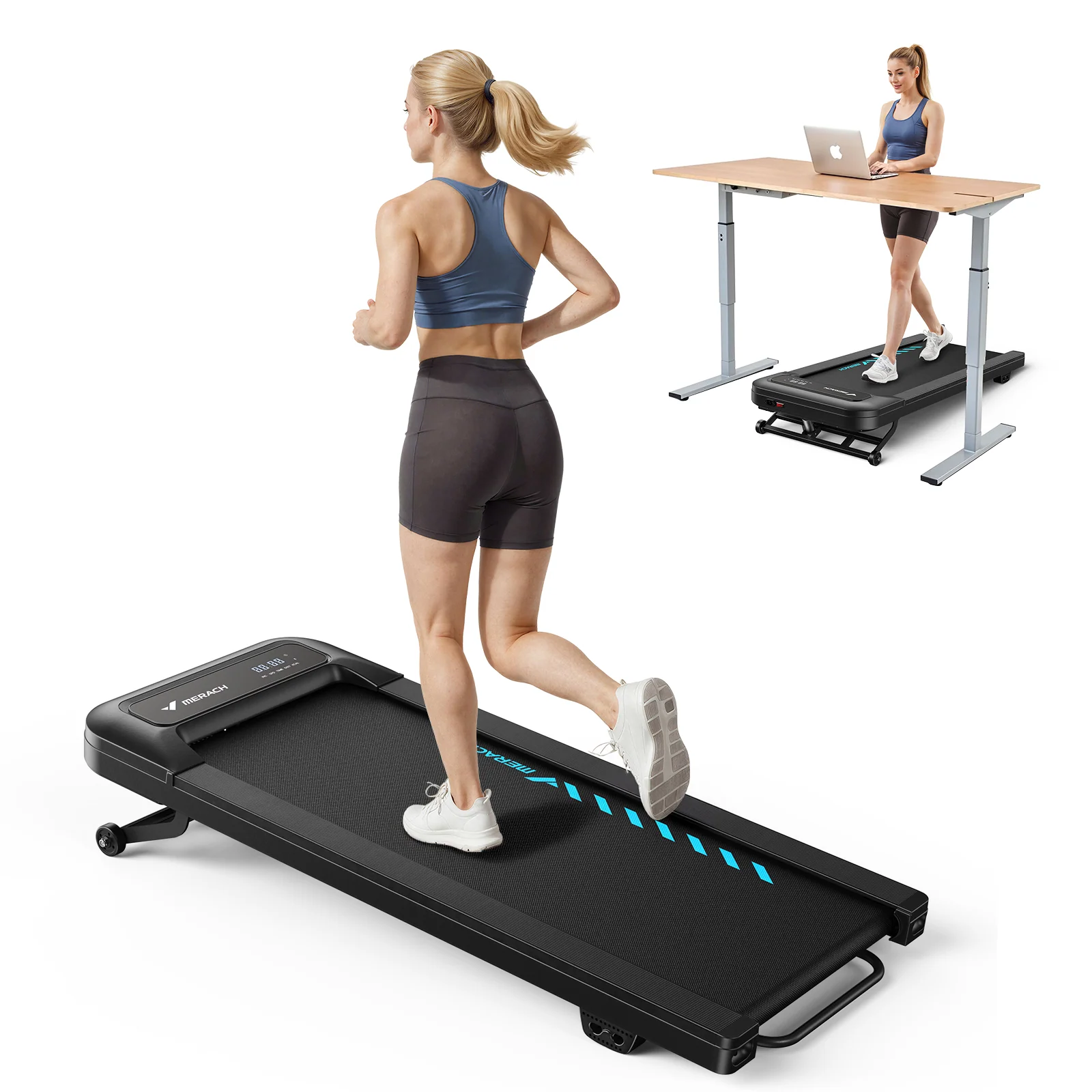
Those categories also help explain why two products can look similar in a catalogue but suit different buyers. A walking pad is geared towards walking and compact daily movement. A treadmill is built for a broader range of paces, subject to the model’s stated limits. An exercise bike shifts impact away from running, while a rower uses a push-pull movement involving both upper and lower body.
- A walking pad supports walking-led movement in a compact format.
- A treadmill may suit readers who want to include running.
- A rower or bike changes the body position and training feel.
For first-time readers, that is the more useful brand story than a single feature claim. Merach is presenting a menu of formats, with product-level differences around entertainment, adjustment and storage. Our recommendation is to shortlist by repeatability and room before comparing specification tiers.
How does Merach make walking and running distinct?
The walking products illustrate the range’s practical side. The Merach UltraWalk W60 Plus Walking Pad is described by the store as having an automatic incline and a wider walking deck. Its positioning is straightforward: a walking-oriented machine with features intended to make indoor walking more varied. Check the product page for the deck dimensions and the exact operating and storage requirements.
For people considering a more conventional treadmill, the Merach T12B3 folding treadmill adds running capability to the conversation. The listing describes a reinforced steel frame, multi-layer cushioning, selectable display configurations and an automatic incline. Its stated running belt measures 108 by 42 centimetres. This is a notably different proposition from a walking pad: it asks for more room and a more deliberate check of speed, incline and user-fit specifications. The T12B3’s UK listing is where to confirm the selected configuration.
The word “folding” is not a substitute for measuring. Buyers should verify the machine’s open dimensions, folded dimensions, clearance and whether the lifting or movement method works in their home. The same care applies to noise, floor protection and where the power cable can safely sit.
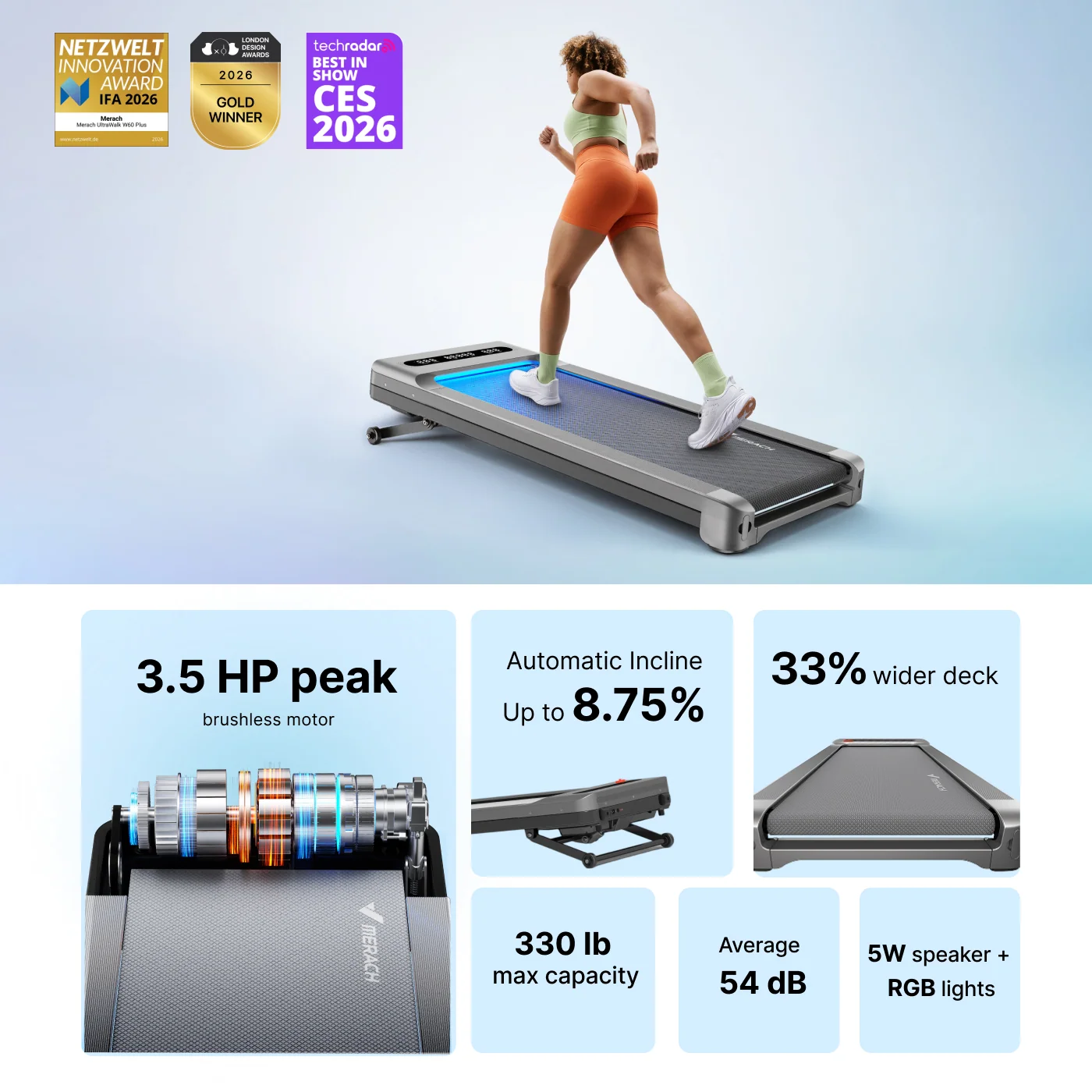
As a simple rule, the UltraWalk W60 Plus is the more natural page to inspect for walking-led use, while the T12B3 merits a closer look when running is part of the plan. Neither should be chosen by title alone: verify the footprint, operating range and the product’s own suitability notes first.
Why does rowing offer a different view of the brand?
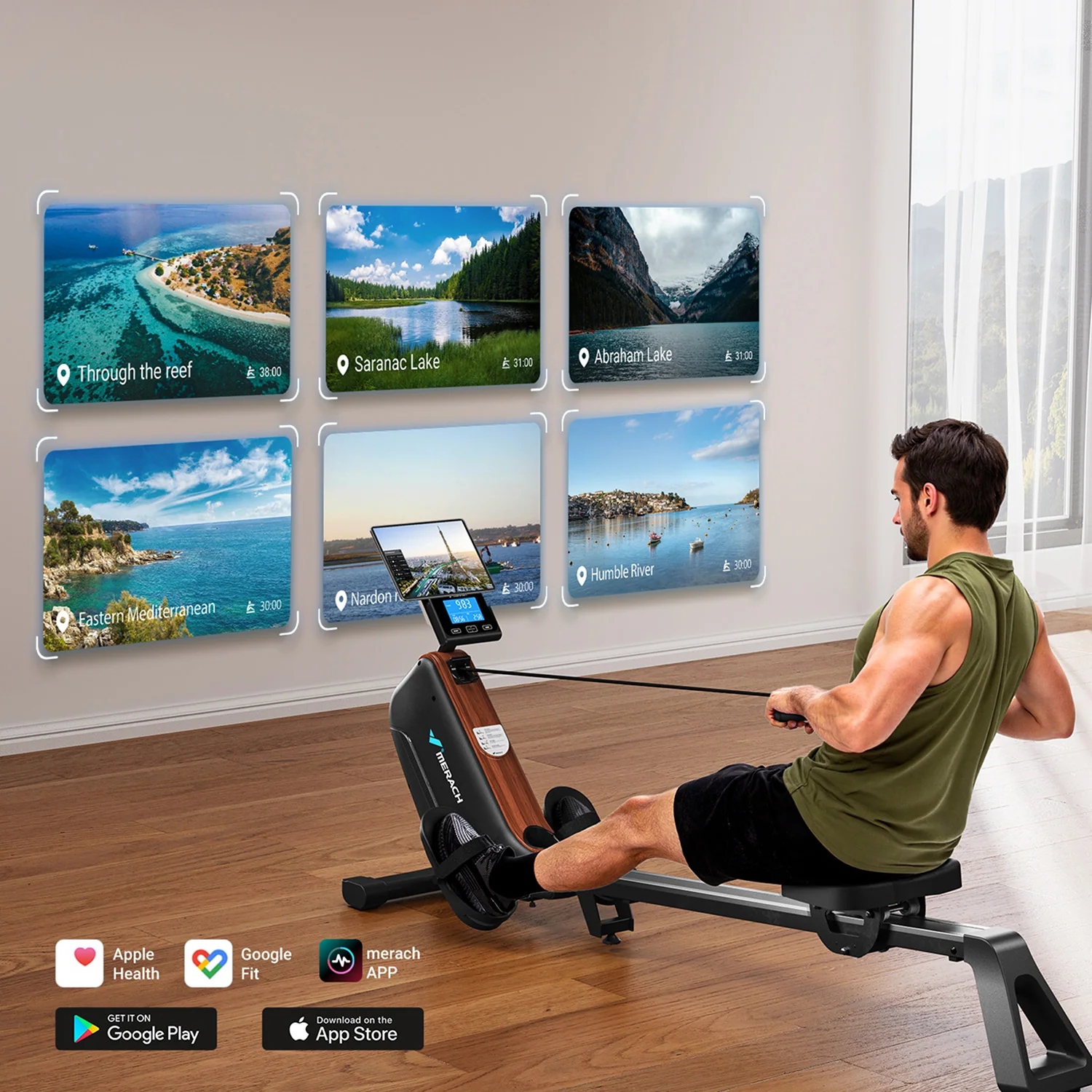
Rowing gives the range a more training-focused dimension. The Merach NovaRow R50 Pro Air Rower is listed with ten air-resistance levels, three workout modes and vertical storage. Air resistance makes effort responsive to the user’s stroke, so the machine can support a range of intensities without relying on a single fixed pace.
Vertical storage is one of the more concrete home-use details in the R50 Pro listing. It can make a long rail easier to accommodate between sessions, but check how the unit stands, how much clearance it needs and whether moving it is manageable. Product pages and diagrams should be treated as the authority for the dimensions and setup at the time of purchase.
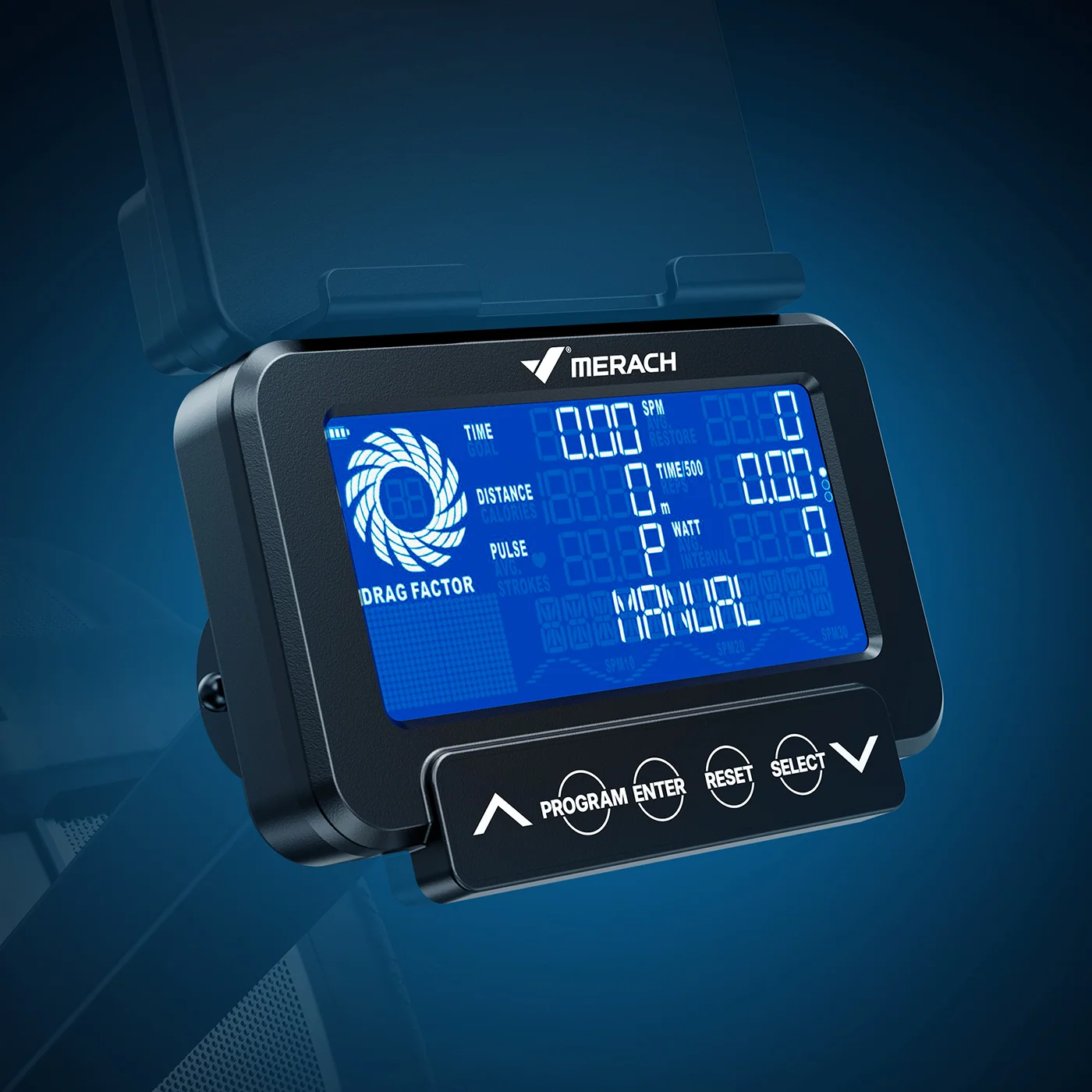
For someone new to indoor rowing, we would treat the NovaRow R50 Pro as a candidate when variable effort and vertical storage are useful priorities. Check resistance mechanics, rail length, seat travel and the instructions for moving or storing it. A few product photographs can suggest the format, but the specification page is where the practical fit becomes clearer.
- Measure the usable floor area with the rower set up for a full stroke.
- Check the stored position and moving method against your room and strength.
- Look for clear guidance on resistance, assembly and app or workout features.
Where do cycling and lower-impact options fit?
Exercise bikes extend the range towards seated cardio. The Merach S23B1 Recumbent Exercise Bike is described with an adjustable seat, resistance bands and eight resistance levels. A recumbent position may appeal to people who want back support and a more upright, supported setup, although comfort and fit depend on individual body dimensions and seat adjustment.
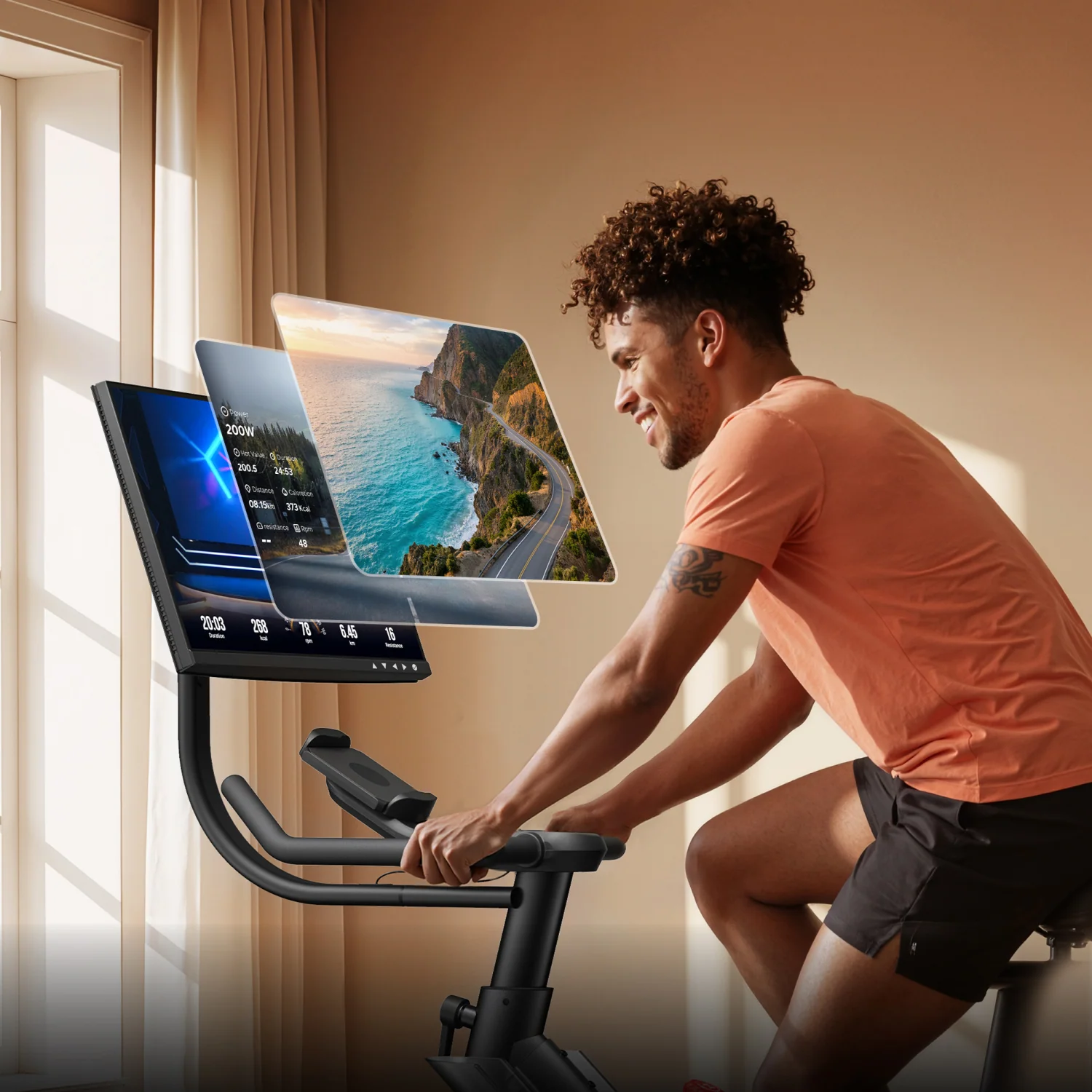
Elsewhere, Merach’s catalogue includes upright and screen-led bikes, which broadens the choice beyond the recumbent setup. Screen features can give a bike a more immersive feel; simpler models may suit people who want a basic cycle session without another display in the room. These are genuinely different preferences, so one “best” bike across the range would be misleading.
Ellipticals round out the cardio selection with a standing, gliding motion. They can be worth examining for people who want a continuous movement pattern without the repeated foot strike of running. The Merach E33B4 Elliptical Trainer is one example in the UK catalogue, though buyers should inspect stride, resistance, machine dimensions and the stated user limits on its own page rather than infer fit from the category label. Its listing provides those model-level checks.
What should a first-time reader verify on the UK store?
Brand-level browsing is useful for understanding the menu; model-level checks are what make a shortlist responsible. Product names and specifications can vary across versions, and the UK store may update listings. Before settling on a machine, use its page to confirm the exact model variant and the details that affect fit.
- Measure the space: use the assembled footprint, movement clearance and stored dimensions where relevant.
- Match the training: check resistance type, pace or incline range, seat or stride adjustment, and workout modes.
- Review the technology: confirm app compatibility, screen functions, casting support and any device limitations.
- Read the practical terms: inspect delivery, assembly, warranty, returns and current availability on the UK store.
Technology deserves particular attention. A product listing may describe casting or app integration, but compatibility can depend on a specific phone, operating system or screen function. If those features influence your decision, verify them against the device you plan to use and the current product details. The T12B3 screen options and the W60 Plus feature list should be checked separately because these are different models.
Also separate a feature from an outcome. Cushioning is a design detail, not a promise that a machine will prevent injury. A higher resistance count does not automatically create a better workout. And having an app does not guarantee that its interface, content or subscription terms will suit you. The careful reader asks what each feature does, what is included, and whether it answers a need they actually have.
Our editorial view is that Merach’s breadth is most useful to households that have not yet settled on one type of indoor training. It allows the first decision to be about format, then about fit and features. The limitation is that a wide range can make quick comparisons difficult: specifications, screen configurations and storage methods are model-specific, so readers will need to inspect individual pages rather than assume the same setup across the brand.
That is also where the brand’s product pages should be approached with a little discipline. Start with the shortlist of two or three formats that could fit your routine. Open the T12B3 page, the W60 Plus page and the NovaRow R50 Pro page side by side, note the dimensions and the features you care about, then confirm the terms and stock status before making a decision. Use the same criteria for each product so that a polished screen or a longer list of modes does not distract from the basics.
- Can the machine stay in place, or must it be moved after each session?
- Which one or two listed features would actually change how often you train?
- Are the current UK delivery, warranty and return terms clear?
For readers choosing between the T12B3 treadmill, UltraWalk W60 Plus and NovaRow R50 Pro, the decision can be reduced to three questions: do you want walking or running, how much floor space can remain occupied, and would you use a rower often enough to learn its technique? Those answers are more useful than chasing the longest specification list.
Ready to explore Merach’s UK range?
We see Merach as a broad home-fitness catalogue organised around distinct ways to move, with product pages that mix practical design choices and connected features. The UltraWalk W60 Plus, T12B3 and NovaRow R50 Pro make that breadth tangible across walking, running and rowing.
Our recommendation is to begin with the movement you are most likely to repeat and then verify size, storage, compatibility and support on the exact UK product page. Compare the folding treadmill, walking pad and air rower by how each fits your routine. The honest limitation is that the range’s breadth makes model-by-model comparison necessary, and no page can determine whether a machine’s feel or setup suits you personally.