





I have a complicated relationship with home gym equipment. I love the idea of a calm, useful corner where I can train before work. I am less keen on buying a giant machine that becomes an expensive clothes horse by February. That is why I approached Merach as a comparison, not a fan club: how does it stack up against the usual budget rowers, basic exercise bikes and app-led premium machines?
The short answer: Merach is strongest when you want plenty of guided, connected training and sensible home-friendly design without jumping straight to premium pricing. It is not automatically the best choice for an Olympic-level athlete or someone who wants the simplest possible piece of kit. In this guide I am comparing the range on the things I would actually check before spending several hundred pounds.
Which practical questions matter when comparing Merach?
Most shoppers are not comparing logos. They are comparing the awkward practical questions: will it fit, will it be quiet, can I still use it after the novelty wears off, and does the price include anything that makes training easier? Merach sells rowers, treadmills, ellipticals, recumbent bikes and strength accessories, so it is closer to a broad home-fitness shop than a single-product specialist.
- Low upfront cost: basic magnetic rowers and folding bikes can be cheaper, but they often leave you to find workouts and motivation elsewhere.
- Premium smart kit: brands built around big screens and subscriptions may feel more polished, but the total cost can be much higher.
- Traditional gym membership: gives you more equipment and heavier resistance, but adds travel, monthly fees and the small matter of actually leaving the house.
- Merach: sits in the useful middle, with app compatibility, tracking and multiple machine styles across a spread of prices.
How do Merach rowers compare with basic alternatives?
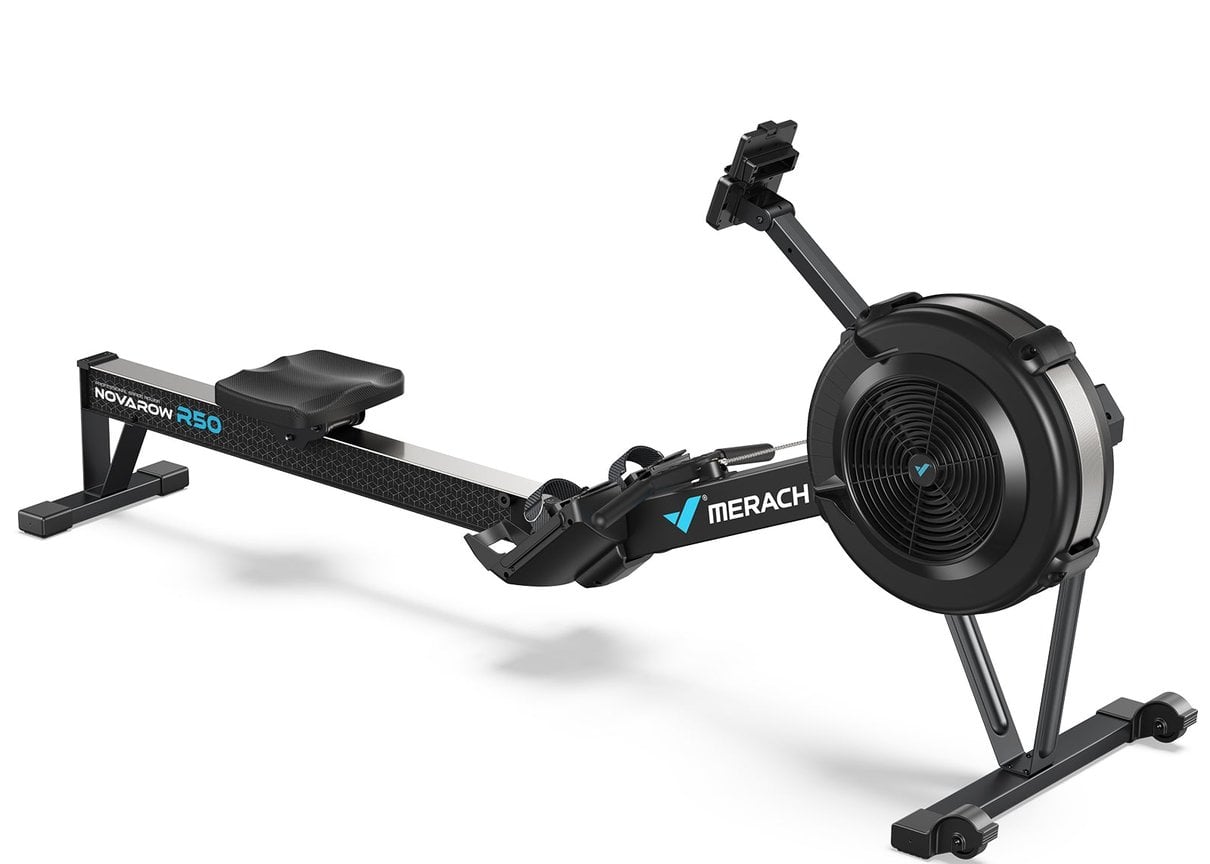
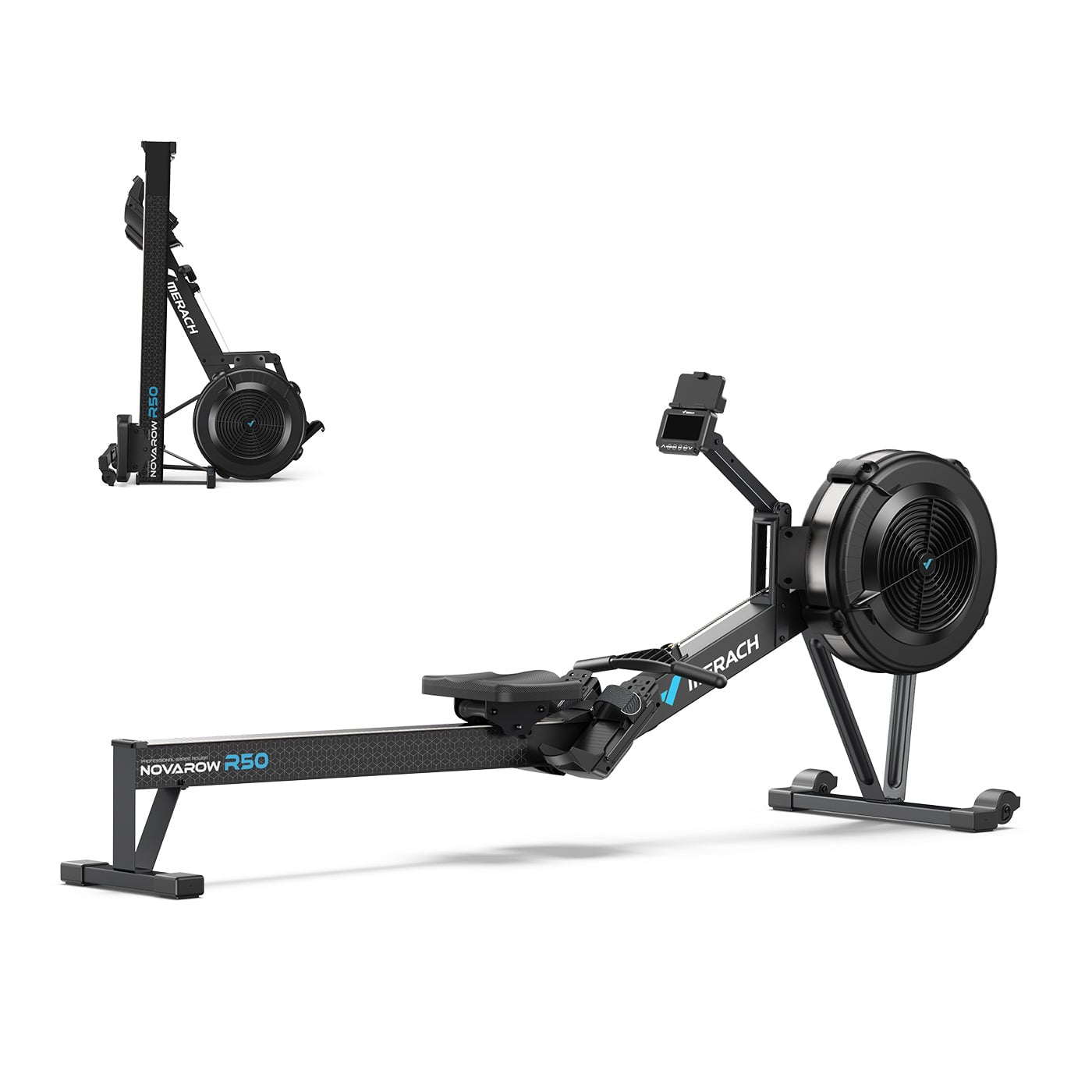
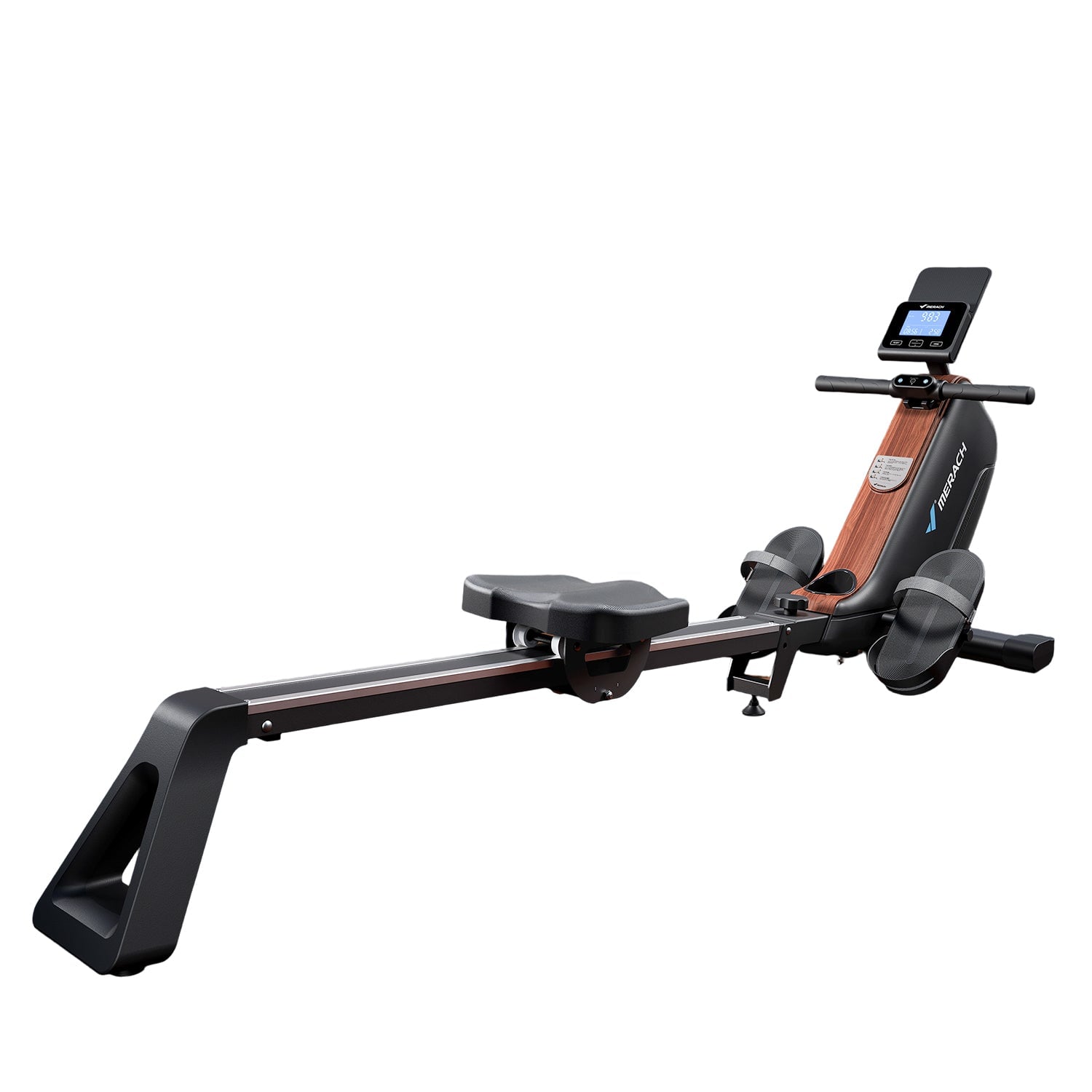
If rowing appeals, the Merach NovaRow R50 Pro Air Rower has ten air-resistance levels, three training modes, a backlit LCD display and a foldable upright-storage design. The combination is more substantial than a very cheap rower, while still being aimed at a spare room rather than a professional training centre. You can also check the NovaRow details before comparing it with a conventional gym rower.
Compared with a basic magnetic rower, air resistance gives the stroke a more naturally responsive feel: push harder and the challenge rises. That can be satisfying, although it also means more noise than a quiet magnetic machine. The NovaRow adds Bluetooth, a phone or tablet holder and the free Merach app, which includes courses and training plans. I would see that as a practical advantage over an unconnected budget model, not a reason to pretend it replaces a coach. The Merach connected range is worth browsing if training variety matters to you.
For a lower-cost, calmer option, the Merach R15 Pro Rowing Machine is the more sensible pick if you want magnetic resistance and a smaller commitment. You still get the familiar home-rower format and connected training support, but you give up the air rower’s more forceful feel. This is the choice I would make for a flat, a shared room or anyone who worries that loud equipment will annoy the neighbours. The R15 product page is the useful place to check its current specification.
My rower short list would look like this:
- Choose the NovaRow R50 Pro for stronger cardio sessions and air resistance.
- Choose the R15 Pro for quieter, more approachable everyday training.
- Choose a conventional gym if you need very heavy loading, coached technique or several specialist stations.
There is no magic here: a machine only earns its floor space when you use it. The useful Merach difference is that the app, display and compact storage give you a few more reasons to start the session instead of scrolling through workout videos for twenty minutes.
Would a Merach bike or elliptical suit you better?
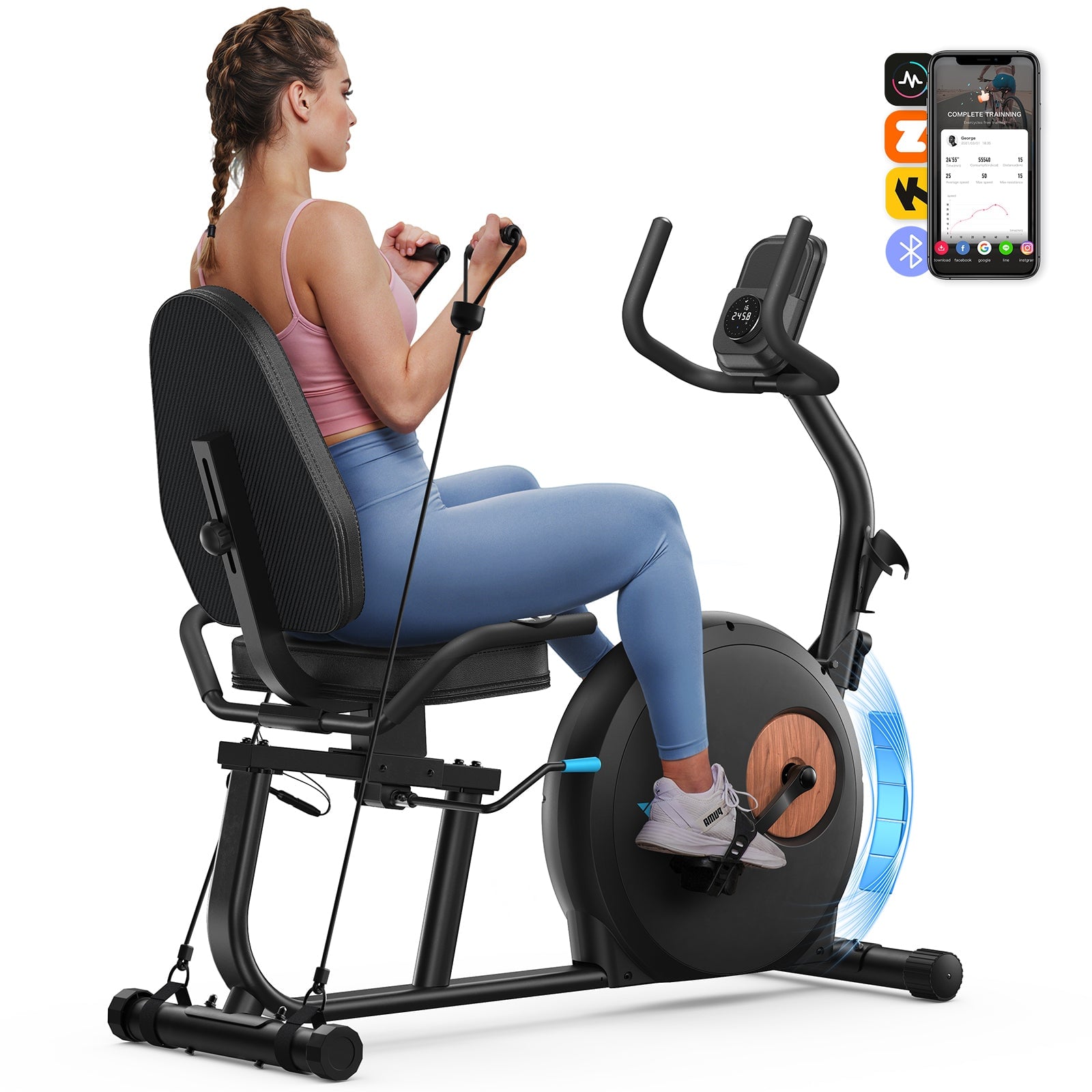
Rowing is brilliant for full-body work, but it is not everyone’s idea of a gentle weekday habit. A recumbent bike gives you back support and lower-impact movement. The Merach S23B2 stands out because it is self-powered, includes built-in resistance bands and offers 16 levels of adaptive resistance. That makes it more versatile than a plain pedal bike, especially if you want a seated cardio session plus a little upper-body work. The S23B2 listing sets out the adjustable comfort features clearly.
It also has an adjustable seat and backrest, Bluetooth and support for the Merach app, Kinomap and Zwift. Against a standard upright bike, the S23B2 is more comfortable for longer, low-impact sessions and more interesting if you like guided workouts. Against a treadmill, it is kinder to joints and usually easier to place in a room. The compromise is obvious: you do not get the same running-specific training stimulus or the simple, familiar movement of walking. I would compare the bike range here if more than one person will use it.
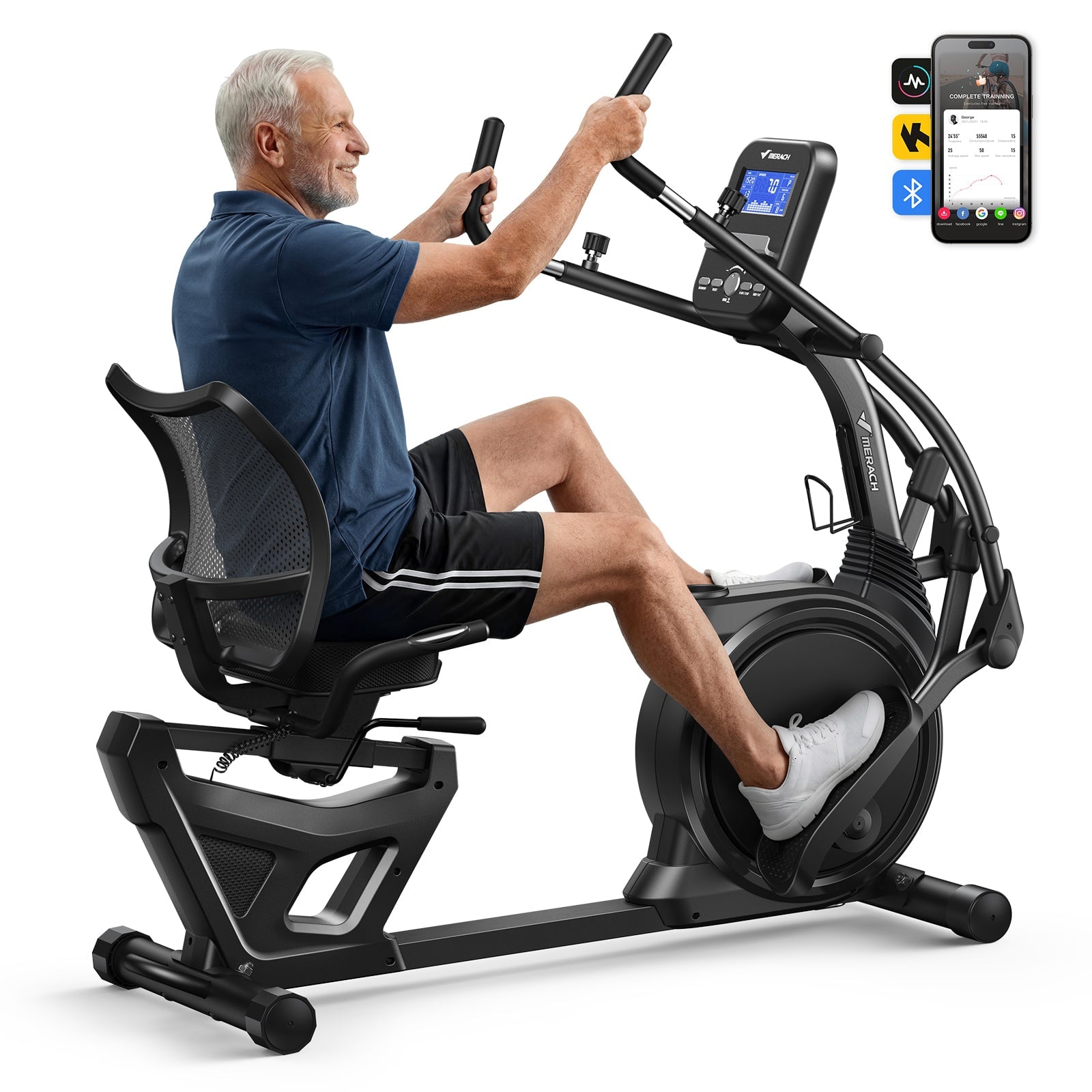
If you want both seated cycling and an elliptical motion, the Merach S19B4 is the broader option. Its 16-level electric resistance, motion arms and 150 kg capacity make it a better match for households sharing one machine between different training preferences. It is also the point where I would compare dimensions carefully, because multifunctional equipment is rarely the smallest option. The S19B4 page is the one to check for the current footprint.
The quick comparison is fairly simple:
- For joint-friendly comfort: choose a recumbent bike such as the S23B2.
- For two movement styles: the S19B4 has the edge.
- For running practice: a treadmill remains the more direct choice, provided you have the space and will tolerate the impact.
That last point matters. A comparison is only honest when the alternative is allowed to win. Merach’s bikes are appealing for low-impact consistency, but they are not a substitute for a treadmill if your goal is specifically to improve running pace.
Could compact Merach equipment meet your needs?
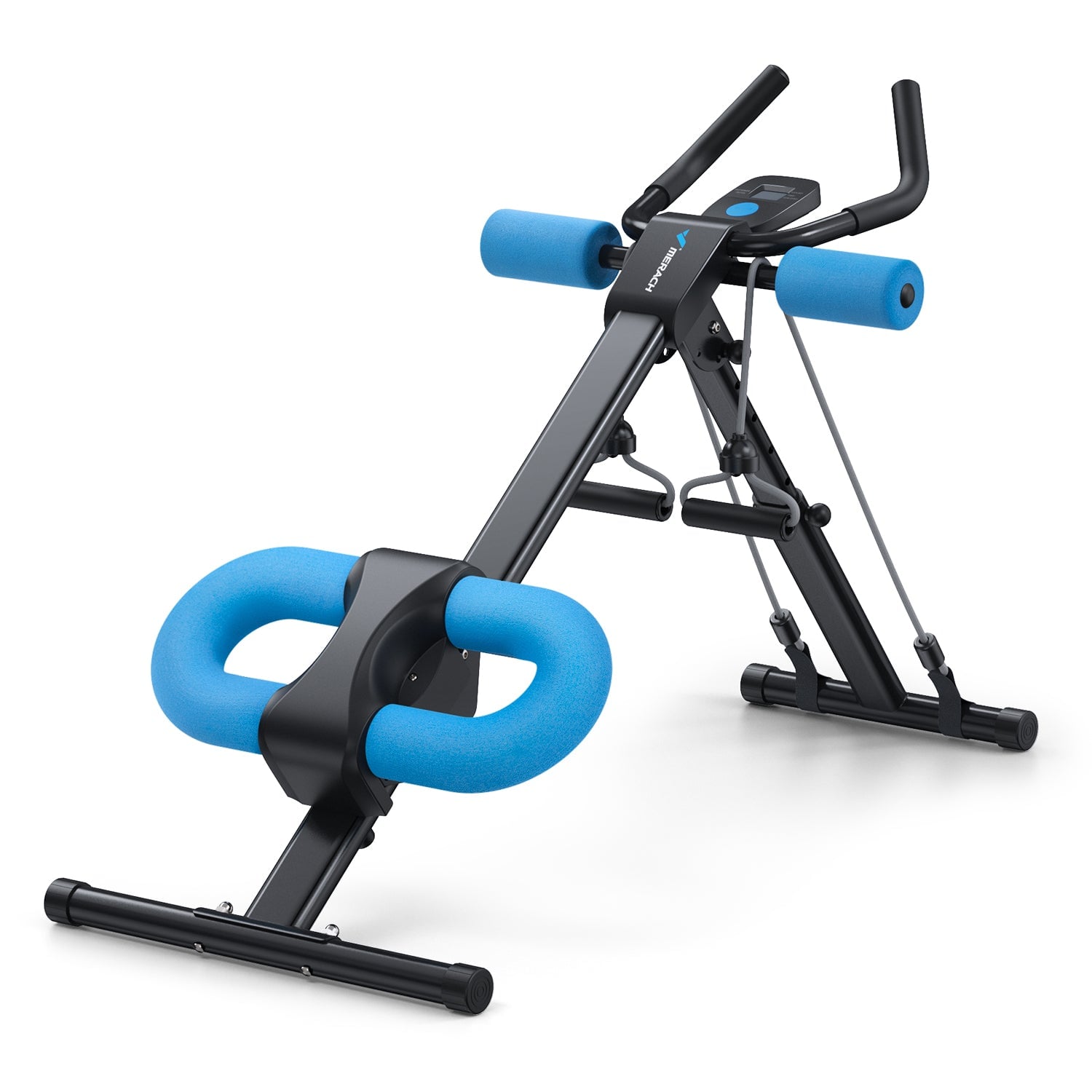
Not every home needs a full-size cardio machine. The Merach 2314 Adjustable Ab Trainer is an interesting alternative to a full-size cardio purchase. It has two incline levels, five height settings, thick padding, silent rollers, an LCD display and a foldable frame. In other words, it is compact enough to be realistic for a bedroom or small flat. The 2314 details are worth checking if storage is your main concern.
It will not give you the cardiovascular range of a rower or bike, and I would be wary of any product promising miraculous belly-fat results. What it can do is make core-focused work less intimidating and more adjustable. Compared with a cheap ab wheel, its knee-friendly padding and guided height changes are friendlier for beginners. Compared with a complete gym machine, it is a low-risk way to add movement without turning the sitting room into a showroom.
That is a recurring Merach strength: the range includes a few different entry points. You can start with a compact accessory, move to a magnetic rower, or spend more on a connected multi-use bike. The sensible decision is to match the equipment to the habit you will keep, not the workout identity you imagine having on a particularly optimistic Sunday.
Where does Merach help, and where should you pause?
- Good value for connected training: the free app, programmed exercises, training plans and data tracking add useful structure.
- Range flexibility: there are rowers, recumbent bikes, ellipticals and compact strength tools rather than one narrow format.
- Home-focused details: folding designs, holders, adjustable seats and quiet magnetic drives make everyday use easier.
- Useful UK reassurance: the brand advertises free shipping, 30-day returns for new unused products and product warranty support.
- Check before ordering: prices, dimensions, noise and warranty terms vary by model, so do not assume every feature belongs to every machine.
The app is worth discussing honestly. It is a helpful bonus, particularly if you need a plan to follow, and compatibility with Apple Health, Google Fit, Kinomap or Zwift can make your data less trapped in one ecosystem. But app quality is personal. If you already love a different training platform, check the exact compatibility of the model you want before paying for the machine.
Before ordering, I would measure the machine footprint, the route into the room and the vertical storage space. I would also check the returns wording, whether assembly help is available and whether the displayed price has changed. A lovely spec sheet is no comfort if the kit cannot get through the stairs or spends six months under a coat.
Ready to choose the Merach machine for your home?
For most home users, yes, Merach is the better middle-ground buy. It offers more guidance and variety than a bare-bones budget machine, while avoiding the higher commitment of a premium connected ecosystem. The NovaRow R50 Pro is the standout for a serious all-round cardio corner; the R15 Pro is the safer value pick if you want a quieter magnetic rower; and the S23B2 makes the most sense for comfortable, low-impact full-body training.
I would choose a typical alternative instead if you have a very specific need: a specialist performance rower for high-level training, a treadmill for running progression, or a plain bike when you want absolute simplicity. For everyone else, Merach’s mix of realistic pricing, foldable designs and connected support makes it a convincing choice. My personal recommendation is to pick one machine around the habit you already have, then use the app to make that habit easier to repeat.
In short, do not buy the biggest machine because it looks impressive in a product photo. Buy the one that fits your room, your joints, your budget and your slightly unreliable motivation. That is where Merach’s home gym range makes a persuasive case.