







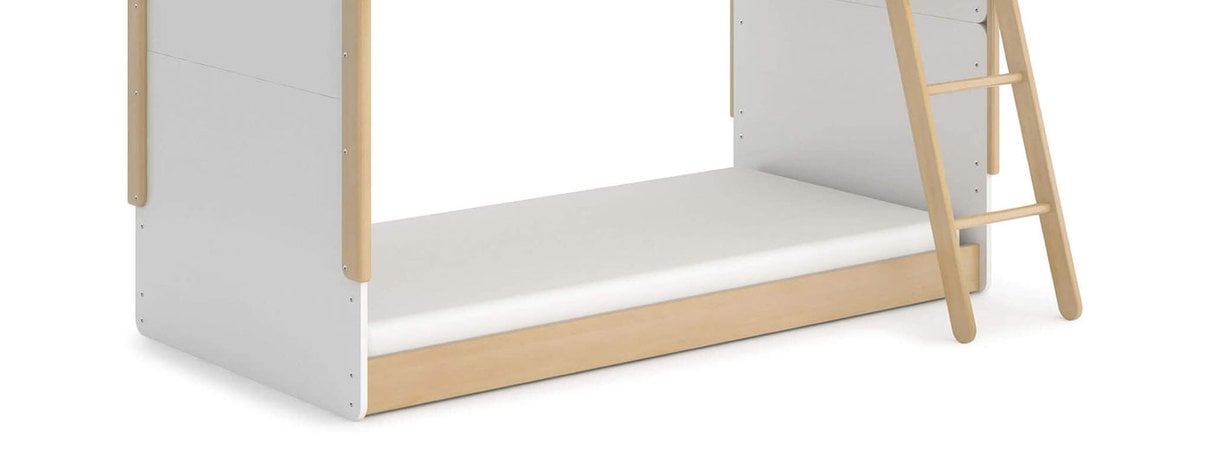
Let me be honest about where I started. When I priced up a solid-wood cot against a flat-pack one, I nearly laughed. The gap looked absurd. Why would anyone pay two or three times more for a bed a baby will outgrow in eighteen months? That was my first reaction, and I suspect it’s yours too. So I went down the rabbit hole – warranties, resale, conversion kits, the lot – and what I found genuinely changed how I shop for my kids’ rooms.
The sticker price is a trap
Here’s the thing nobody tells you in the shop. You’re not buying a cot. You’re buying however many years of use that cot gives you before it ends up at the tip – and that number is wildly different between materials. Flat-pack furniture is usually chipboard or MDF wrapped in a printed laminate. It looks fine on day one. But the joints loosen, the laminate chips, and once you’ve taken it apart and rebuilt it for a house move, the screw holes are shot.
Solid wood behaves differently. It can be sanded, re-tightened, and passed down. That’s the whole argument in one sentence. A brand like Boori, which builds its children’s furniture from solid, sustainably sourced wood, is selling you the years, not just the object. And once I reframed it that way, the maths stopped looking silly.
Cost-per-year: the only number that matters
Forget the price tag for a second. Divide what you pay by the years of honest use, and you get cost-per-year – the figure that actually tells you whether something was a bargain or a waste. A cheap flat-pack cot that you replace at the toddler stage, then replace again with a single bed, has hidden costs. Three purchases. Three deliveries. Three afternoons lost to an Allen key. That adds up in money and in your sanity.
Now picture one well-made piece that does all three jobs. Suddenly the spread of the cost over six or seven years makes the dearer item look like the frugal choice. Counter-intuitive? Completely. But that’s exactly how cost-per-year works, and it’s why Boori’s convertible designs change the conversation. You buy once. You convert. You keep going.
Let me make that concrete with a quick illustration – and these are made-up example numbers, not quoted Boori prices, so treat them as a back-of-the-envelope sketch. Say a solid-wood frame costs around 600 GBP and carries a child for seven years. That’s roughly 85 GBP a year. Now run the cheaper path: three flat-pack buys at about 150 GBP each, because the first two get binned before they’re done. That’s 450 GBP for furniture you no longer own, plus the deliveries and the rebuilds. Which one was actually the bargain? The “expensive” one quietly wins on the only line that matters.
Quick gut-check before you buy
Ask one question at the till: how many years will this realistically last my family? If the answer is “until the next growth spurt”, you’re paying for a short rental, not furniture. Solid wood that converts spreads its cost across the whole of childhood – and that’s where the value hides.
Convertible furniture – the grown-up version of value
This is the part that won me over. Boori uses what it calls conversion technology, with kits that turn a cot into a toddler bed and beyond. One frame, several lives. So the piece that held your newborn becomes the bed your four-year-old refuses to get out of on a school morning. You’re not re-buying. You’re adapting what you already own, which is a very different feeling at the bank.
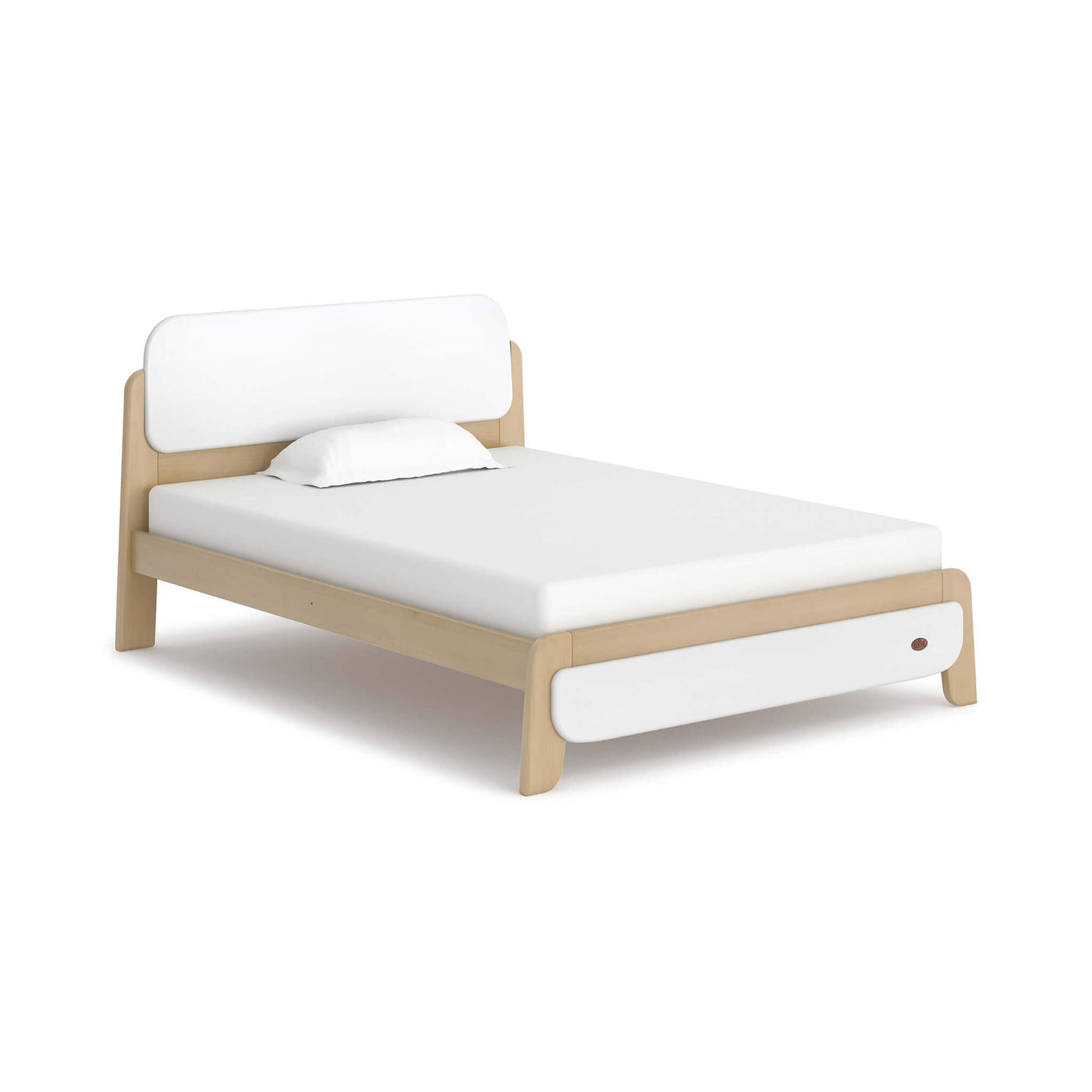
Does every flat-pack range offer this? A few do, in fairness – I don’t want to pretend convertibility is unique. But there’s a difference between a laminate frame that technically converts and a solid-wood one that survives the conversion intact. Strip a chipboard joint twice and it gives up. Re-drill solid timber and it holds. If you want a piece that actually grows with your child, the material doing the converting matters as much as the clever kit. Boori’s “grow with your child” approach leans on both at once.
What a warranty is really telling you
I used to skim past warranty length. Big mistake. A warranty is a manufacturer betting its own money on how long the thing lasts – and that bet is information. Boori offers warranties from one to five years across its range. Read that the right way. A company doesn’t promise five years of cover on furniture it expects to wobble apart in two. The guarantee is the brand quietly showing you its confidence.
A warranty isn’t a free perk. It’s the maker telling you how long they genuinely expect their furniture to survive your family.
Compare that to the unspoken warranty on most cheap flat-pack: roughly until you next move house. There’s a reason the cover is short or absent. With Boori, the piece is registered with the brand, which matters when you actually need it – because nobody chases a warranty when they’re happy, only when something’s gone wrong. Want to weigh the cover yourself? Check the warranty terms on the Boori range before you decide.
Resale, hand-me-downs and the second life nobody plans for
Here’s a question worth sitting with. What’s your flat-pack cot worth in four years? Be honest. Laminate furniture has almost no resale value – chipped corners and a swollen edge where a beaker leaked, and it’s destined for the skip. Solid wood holds its value far better. You can sell it on, gift it to a friend with a new baby, or simply keep it for a second child without a single repurchase.
That second life is real money you tend to forget at the point of sale. A solid-wood piece that’s still good for child number two has effectively halved its own cost. Try doing that with a frame that’s already on its last legs after one toddler. This is where the durability that a heritage maker like Boori builds in – it’s been refining the same craft since 1993, over three decades – quietly pays you back.
The sustainability angle that isn’t just marketing
I’m wary of green claims – we all should be. But there’s a logical thread here that holds up. Boori sources its timber from certified sustainable plantations, and it laser-measures the wood to cut waste, so fewer trees go into each product. The bigger point is simpler still. Furniture that lasts a decade and gets handed down is, by definition, the least wasteful thing you can buy. One good cot beats three landfill ones. That’s not a slogan – it’s just arithmetic.
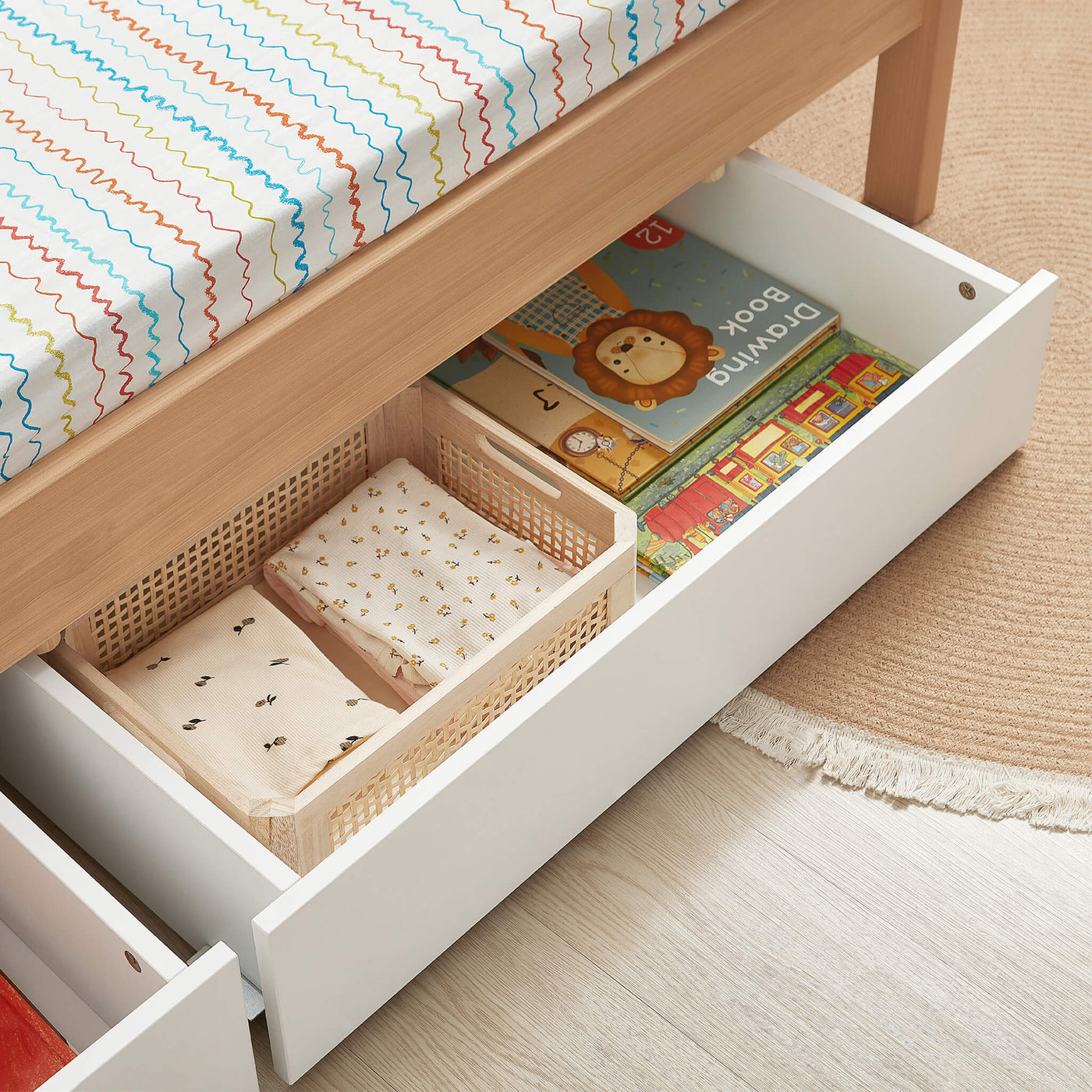
There’s a quieter value point here too. Because the range coordinates (with free UK mainland delivery thrown in), you can build a room that ages as a set rather than a patchwork – fewer mismatched replacements down the line. If a calm, matching room that grows up with your child appeals, it’s worth browsing how the Boori pieces coordinate.
So is it actually worth the extra spend?
My honest verdict, after talking myself out of my own scepticism? Mostly, yes. If you’re buying for a cot you’ll convert, keep, and maybe pass on, the cost-per-year on solid wood undercuts the cheaper option once you count the replacements you avoid. The warranties back it up. The resale value is real. The hand-me-down potential is the part you’ll quietly thank yourself for.
The one flaw I’ll admit plainly: the upfront cost is a genuine barrier, and not every family can float it in one go, however good the long-term maths looks. If your budget simply can’t stretch on day one, no spreadsheet changes that, and I won’t pretend otherwise. But if you can manage the bigger initial outlay, the long game rewards you – in money, in clutter, in the things you don’t have to rebuild. Ready to run your own cost-per-year sums? Take a proper look at the Boori range and decide for yourself.