



Planning a London day around immersive art raises a practical question: is Frameless a full visit in its own right, or does it make more sense as one part of a wider outing?
We reviewed the venue’s current UK pages, which describe four permanent projection-led galleries, plus changing events and optional add-ons. The offer is broad, but the right choice depends on whether you want a gallery-led visit, an adult evening, a temporary exhibition or a personalised keepsake.
Our focus here is the published experience information: the site explains what each format includes, while availability and visit details still depend on the date you choose.
Disclosure: this post includes affiliate links, and we may be paid a commission on purchases made through them.
The short version: Frameless is most compelling for visitors who want familiar artworks presented as room-scale moving image and sound. Standard admission anchors the visit; Lates, the Comedy Wildlife residency and The Art of You are distinct extras, not reasons everyone needs to choose a different ticket. Check the selected date and current inclusions before committing.
What does a standard Frameless visit actually centre on?
The core is the four-gallery experience. Frameless describes a collection of more than forty artworks interpreted through projection and sound, arranged across galleries called Beyond Reality, Colour In Motion, The World Around Us and The Art of Abstraction. Visitors can move through familiar works in a format that makes scale, colour and motion the main event.
That approach is the venue’s clearest strength. A traditional gallery asks you to look at individual works; Frameless puts imagery around the room and builds an environment from it. The site names artists and examples within each gallery, making it possible to see whether the programme overlaps with your interests before you go. The Standard admission information is the place to check the current core offer, and the ticket page should be revisited for the date-specific details.
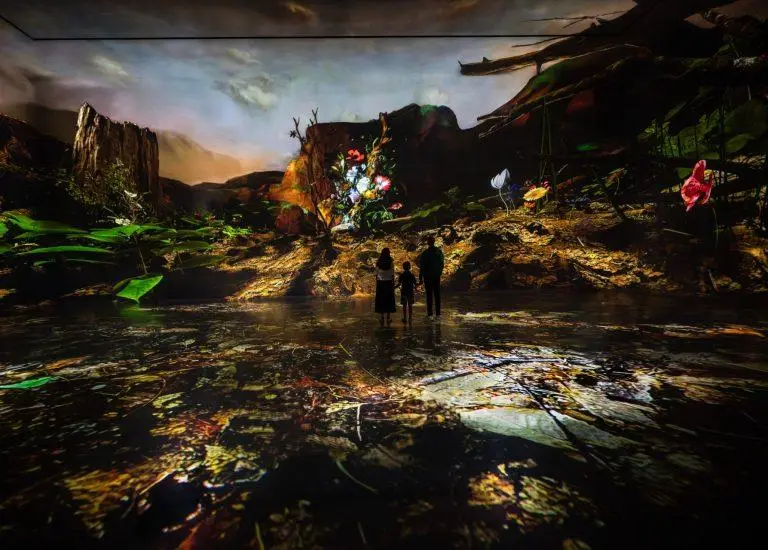
The trade-off is that the presentation can take attention away from close, quiet study of a single artwork. If you prefer labels, original objects and a slower encounter with paintings, this is a different kind of cultural outing. The published material focuses on the visual concept rather than promising a fixed pace or length, so leave room for your own tempo and verify practical visit guidance before setting off.
- Choose the core visit if large-scale visual interpretation is the main draw.
- Look through the named galleries first if you have a strong preference for surreal, landscape or abstract work.
- Confirm entry information for the date you want on the official Frameless ticket listing.
The four-gallery structure gives the experience variety without asking visitors to choose a single exhibition in advance. Each standard ticket option should still be assessed against the visit details shown during booking, since the general description cannot answer every date-specific question.
How do the four galleries change the mood?
Beyond Reality leans into surreal and symbolic imagery, using mirrors and projection to make familiar compositions feel less fixed. Colour In Motion is a more immediate choice for visitors drawn to vivid palettes and movement. In The World Around Us, landscape and natural scenes give the work a recognisable starting point, while The Art of Abstraction makes shape, colour and form the subject.
These distinctions help visitors form a rough route through the venue, even if the site does not prescribe a single ideal order. They also make Frameless easier to recommend to a mixed group: people can gravitate towards different rooms instead of needing to agree on one artist or theme. For a first visit, browse the descriptions and the official gallery admission information together, then decide whether the whole venue suits the group.
Still, room-scale presentation is a particular aesthetic. The gallery visit is better suited to people who enjoy immersive display than anyone seeking an exhaustive art-historical survey. The official pages list works and artists, but do not make the projected interpretation a substitute for seeing original paintings. That is a fair boundary for the format, and a useful one to keep in mind when deciding who in your group will enjoy it.
Our advice is to use the gallery names as a quick preference check: colour and movement point towards Colour In Motion; a dreamlike atmosphere towards Beyond Reality; recognisable views towards The World Around Us; and formal experimentation towards The Art of Abstraction. The current Frameless listing can then confirm how to book the main experience.
- Choose the projection format if moving visuals are the point of the outing.
- Use the gallery themes to check the match for your group.
- Keep traditional object-led galleries on the list if close study matters more.
When does a residency add something worthwhile?
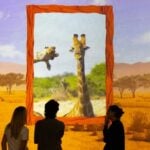
Changing programming gives repeat visitors and exhibition-minded guests a reason to look beyond the permanent rooms. The Nikon Comedy Wildlife Awards Immersive Experience is one named residency, built around humorous wildlife photography. It is a noticeably different visual register from the art collections: animal images and comic moments create a lighter, more accessible counterpoint.
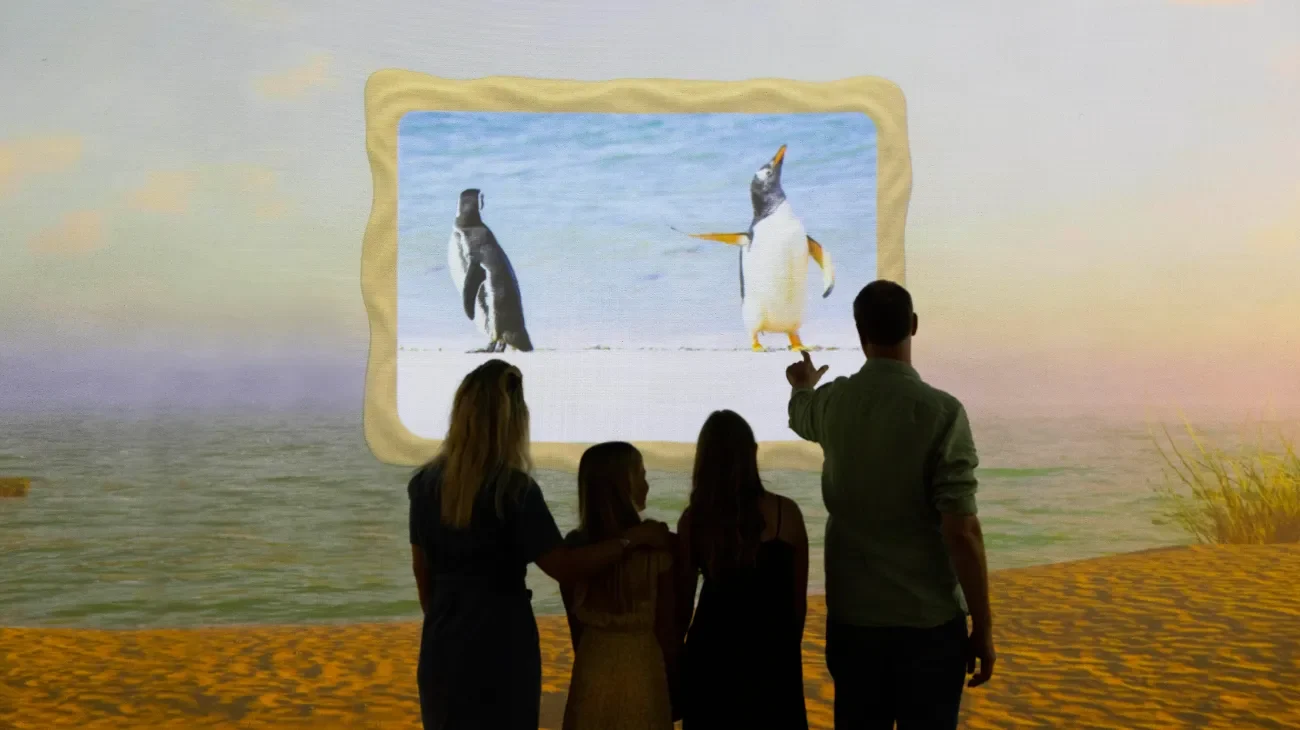
The benefit is specificity. Someone who enjoys wildlife photography or is bringing a group with varied art interests may find this exhibition an easy conversation starter. Its limitation is that residencies change: the Comedy Wildlife residency page is useful for understanding the current concept, but it should not be treated as a permanent part of every future visit. Check the exhibition information against your chosen date, and keep the main Frameless booking page open for ticket inclusions.
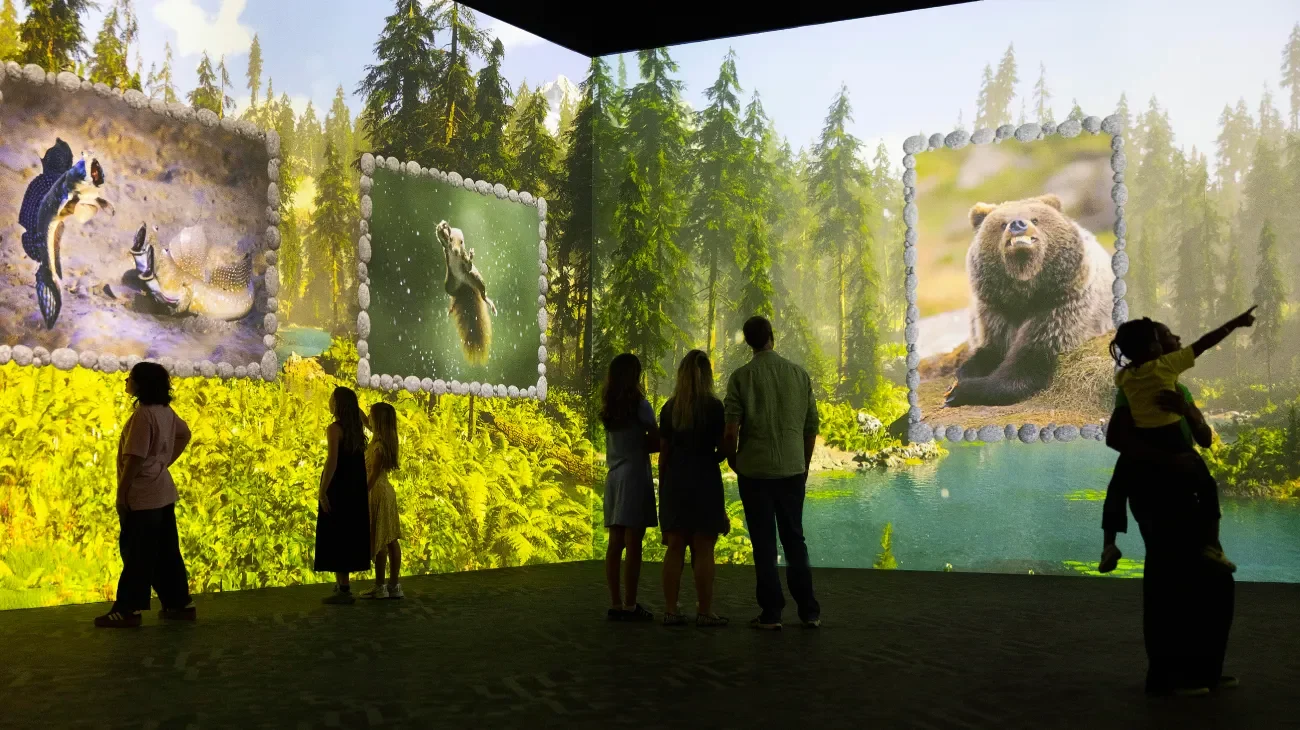
Different settings help explain why the residency offers a lighter change of pace from the permanent art galleries.

For a first-time visitor, the residency is best treated as a bonus rather than the core reason to choose Frameless. For returning visitors, it may refresh a familiar visit, provided the run is still active. We would check whether the temporary programme is included in the ticket route being considered; the public descriptions explain the exhibition, but the date and booking details settle the practical question.

- Check whether the residency is running on your selected date.
- See how the exhibition fits with the standard gallery admission information.
- Consider it an extra draw if wildlife photography appeals to your group, rather than assuming it defines every Frameless visit.
That distinction keeps expectations grounded. The gallery programme is the dependable shape of the experience; the changing residency details are the part to verify before building a London plan around them.
If the main galleries are your priority, compare the date and entry details before adding a separate event to the plan.
Is FRAMELESS Lates a different kind of visit?
Yes, primarily because it shifts the experience into an after-hours format for adults. The venue positions FRAMELESS Lates as an after-hours option for adults, which can suit a date or a night out with friends. The galleries remain the anchor, but the timing changes the social context.
- Compare the after-hours format with your preferred visit time.
- Confirm which dates offer Lates before arranging the evening.
That is a useful distinction, not automatically a better version. Visitors choosing Lates should read its dedicated event details and check the relevant date. The Lates page can clarify what the evening format includes; the main ticket listing helps compare it with regular admission. Timing and audience are the meaningful differences to weigh, rather than assuming extra access or content not stated for a given event.
Its limit is equally clear: an adults-focused evening will not fit visitors looking for a daytime family outing. If the time slot is the attraction, Lates may fit; if your goal is simply to see the four galleries, standard admission is the more straightforward starting point. The official Lates information and the current ticket options deserve a date-by-date check.
What does The Art of You add to the visit?
The Art of You Photo Experience is a separate personalised portrait activity in the Crossing Gallery. Frameless says visitors can choose from artistic interpretations inspired by styles they have encountered during the visit, with artwork created for one person or shared by two. The result can be taken as a digital image or as a printed keepsake; the site says printed versions include a digital copy and a souvenir photobook.
The appeal is practical and emotional: the activity turns the visit into something more personal to take away, and it works as an optional pair activity. It is not necessary to understand or enjoy the core galleries, though. The published information presents it as an add-on, and visitors can decide whether a portrait keepsake matters to them. The Art of You page explains the available formats, while the ticket booking route is where the venue says it can be added during checkout.
- Choose between a digital image and a printed keepsake.
- Decide whether you want a solo portrait or a shared image for two.
- Check the current option on the official experience page.
The practical drawback is that the site does not tell every visitor how a particular style will look on them or how long the process takes. It says the activity can be added at checkout; confirm current availability and booking details on the official page. Consider it a spontaneous extra if you like keepsakes; skip it if your priority is spending time with the galleries. Confirm the current choices directly on the experience page before making a plan around it.
- Start with the gallery visit that matches your interests.
- Add Lates only if an adults-focused evening suits your timing.
- Check the current residency if temporary photography is part of the draw.
- Decide on The Art of You as an optional keepsake, not a required part of admission.
Ready to choose a Frameless visit?
We recommend Frameless for visitors who want a visually immersive London attraction and are happy to experience art through projection, sound and movement. Its strength is a clearly differentiated set of galleries, with optional formats that can make the visit more social, time-specific or personal. The named options have distinct roles: standard admission for the main galleries, Lates for an adults-focused evening, a residency for temporary subject matter and The Art of You for a portrait memento.
The honest limitation is that a broad description cannot settle date-specific availability, suitability or what matters most to each visitor. Frameless is also not a replacement for a quiet, object-led museum visit. If its visual format fits your group, check the chosen date, the current event details and what the booking screen includes before making plans.
For a first visit, we would begin with the main gallery listing and add an event only when its timing or subject is a genuine reason to go. The Frameless ticket page is the sensible next step; visitors considering an evening can also review FRAMELESS Lates, while those drawn to photography can check the current residency and The Art of You.