






Why London Views Are Harder to Rank Than You Think
This is Part 1 of the Sky High series, which will eventually cover three cities. Part 2 moves to New York. Part 3 heads to Boston. I am starting with London because it is the city I know best from above, and because London’s viewpoint landscape is genuinely more complex than most visitors realize.
The immediate instinct is to rank by height. The higher you go, the better the view. But height is only one variable. The quality of a city view depends on light, composition, crowds, cost, and – crucially – what you are actually looking at. London has layers. Getting those layers right is what separates the viewpoints worth your time from the ones that look impressive in photos but feel flat in person.
I have visited every location on this list multiple times, at different hours and in different conditions. These rankings reflect that accumulated experience, not a single visit.
The Rankings
| Rank | Viewpoint | Cost | Height | Best For |
|---|---|---|---|---|
| 1 | The View from The Shard | PS32-38 | 800ft | Open-air Skydeck, widest panorama |
| 2 | Sky Garden | Free | 525ft | Best free view, indoor garden |
| 3 | Tate Modern Switch House | Free | ~200ft | Best photographic composition |
| 4 | The Monument | PS5 | 202ft | Historic, underrated, small crowds |
| 5 | Primrose Hill | Free | Ground-level hill | Best natural skyline view |
1st Place: The View from The Shard
The Shard wins because of the open-air Skydeck on floor 72. No glass panels, no barrier between you and 800 feet of London air. The Thames is directly below and the city spreads in every direction. Tower Bridge, the City of London, Canary Wharf, the green patches of parks – it all compresses into a single frame that makes London’s geography finally legible.
The cost is real – PS32 to PS38 depending on timing and advance booking. But it is the only viewpoint on this list that offers both the greatest height and an open-air experience. For a first visit to London, or for anyone who has not been above the city before, it is the one I would prioritize.
One caveat: floor 68 and 69, the enclosed observation decks, are less impressive than the Skydeck and that is where most of the marketing images are taken. Get through those and go up.
2nd Place: Sky Garden
Sky Garden is 35 Walkie-Talkie building, and the fact that it is free – genuinely, completely free, with advance booking – remains one of London’s best kept open secrets. Well, not exactly a secret anymore, which is why booking a few days ahead is now necessary.
The interior garden is extraordinary in a way that is difficult to photograph accurately. Three floors of planted terrace with a glass ceiling and London visible in every direction. You can book a free slot, sit with a coffee, and look at the city for as long as you like. The light in the afternoon, when the sun hits the glass, turns the whole space warm and slightly dreamlike.
3rd Place: Tate Modern Switch House
This is the one photographers choose when they want that specific shot – St Paul’s Cathedral framed by the Thames, perfectly centered. The Switch House viewing terrace on level 10 is free with museum entry (which is itself free), and the composition looking north across the river is arguably the most photogenic single view in the city.
It is lower than Sky Garden and far lower than the Shard. But it is the only viewpoint on this list where the view itself has been specifically designed as a compositional element – the angle and position were chosen deliberately to frame St Paul’s, and it shows. If photography is a priority, this beats everywhere else on the list.
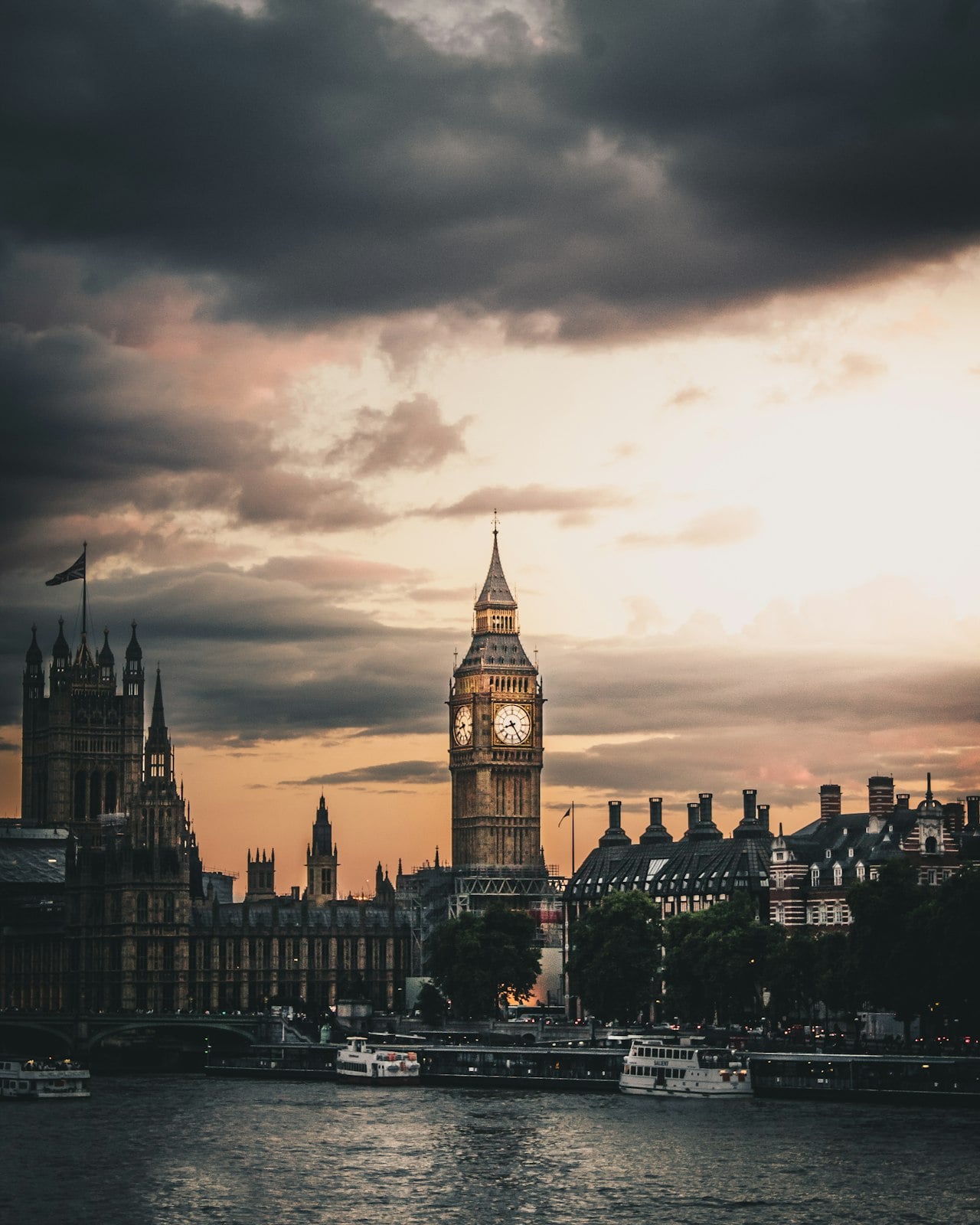
The Tate Modern terrace gives you the view London wants you to understand about itself – the old cathedral, the new bridge, the river that connects everything across centuries.
4th Place: The Monument
This is the underrated pick. The Monument to the Great Fire of London is a 202-foot column in the City, and climbing the 311 steps to the top costs five pounds. The view from the golden urn at the top is not as wide as anything above it on this list – you are surrounded by modern buildings that mostly block the wider panorama.
But the experience of being inside a 350-year-old structure and looking at the City of London from inside the City of London is specific and historically resonant in a way that glass observation decks cannot replicate. You also get a certificate for completing the climb, which sounds silly and is actually quite charming. Small crowds, minimal queues, great value.
5th Place: Primrose Hill
Not a building, not a tower – just a hill in a park in north London. But the view from the top of Primrose Hill looking south shows you the London skyline from a distance that makes the whole thing legible: the Shard on the right, the cluster of City towers in the middle, the wheel somewhere to the left, and St Paul’s dome holding its position among everything newer and taller.
It costs nothing and it is 30 minutes from central London. If your travel budget is genuinely tight, this is the view I would choose. The fact that it is at ground level and surrounded by grass and dog walkers makes it feel honest in a way that paid observation decks do not always manage.
Coming Up in the Sky High Series
Part 2 covers New York, which is a fundamentally different challenge – it has more options, higher heights, and the specific question of whether One World Observatory or the Empire State Building wins. Part 3 takes the series somewhere unexpected: Boston, which has fewer dramatic viewpoints but some genuinely underrated ones that most visitors never consider. Stay with us.